Showing posts with label Go go go Geronimo. Show all posts

Thursday, 17 December 2015

Season 9 wrap-up

As Season 9 comes to a close, let's have a little look back.

My scores

Episode 1 - The Magician's Apprentice 9/10
Episode 2 - The Witch's Familiar          7/10
Episode 3 - Under the Lake                   8/10
Episode 4 - Before the Flood                 6/10
Episode 5 - The Girl Who Died             9/10
Episode 6 - The Woman Who Lived     10/10
Episode 7 - The Zygon Invasion            9/10
Episode 8 - The Zygon Inversion         10/10
Episode 9 - Sleep No More                    9/10
Episode 10 - Face the Raven                 8/10
Episode 11 - Heaven Sent                    10/10
Episode 12 - Hell Bent                           8/10
                              Season Average =  8/10

This season started off quite strongly with The Magician's Apprentice, but then again, I'm a sucker for Davros. Sadly this story fell short in the conclusion, as dos the next one. After this little false start, the season was very solid. The introduction of Ashieldr was a breath of fresh air. It's always fun when someone can challenge The Doctor, and Maisie Williams was superb in the role.

The loss of Clara was probably about due. As I've said before though, its impact was considerably lessened by the addition of two more episodes with her appearing, and the knowledge that she had what was likely a considerable life after that. Her death went from a cautionary tale about the dangers of hubris to essentially showing her being rewarded for her arrogant behaviour with effective immortality.

For all that though, I know I would love to watch at least a little bit of the Clara and Ashieldr show. The things those girls could get up to.


Have fun, you crazy kids!

Ongoing problems


Thinking about my pet peeves, Season 9 had:


I'm not sure, but this could be a record with regards to In-Who-Endos. Most of them added nothing as well, like Clara's couple of references to a lesbian fling with Jane Austin. It's so frustratingly unnecessary.

I thought with the early loss of the Sonic that we'd get less Deus Ex Screwdriver this season, but the immediate introduction of the seemingly even more powerful Sonic Sunglasses kept it relatively alive. Still not as bad as some seasons for actual usage, but as a concept, the sunglasses annoyed me no end. I'm glad to see them go, even if the new design of the sonic is a bit... elaborate.


Add more glowing bits!

The large number of two-parters has all but eliminated Go, go, go Geronimo! as an issue. That said, a couple of those two-parters were probably more like loosely related standalone episodes. The Girl Who Died / The Woman Who Lived could easily have been split up with no loss of coherency. Similarly, Face The Raven, Heaven Sent, and Hell Bent were only technically the same story because each picked up immediately after the last and were steps in getting The Doctor to Gallifrey. The stories themselves were reasonably separate.

I'll also point out that most of the stories showed The Doctor in his new Rock and Roll guise, playing the electric guitar for no real reason. I'm categorising this as his Annoying Catch Phrase, and very much got to the More of the Same stage.

Season Arc


The Hybrid arc was one of the most blatant since the reboot. Davros fully explained the prophecy in the second part of the first story, so it was out there early. This meant we had to have several stories that attempted to pile confusion onto the situation by adding a bunch of things that could be referred to as Hybrids like Ashieldr and Osgood.

In some ways, I felt this arc didn't have enough time to play out. Perhaps this is the one drawback of having so many two-parters. It would have been nice to see this arc play out over a longer period. There are a bunch of other things that could possibly be considered Hybrids that could also have been referenced here. River Song is basically a Hybrid. Rose Tyler absorbed the Time Vortex, so maybe that counts. Then there's the Doctor Donna and even Cyber-Danny. References to these as possibilities of being the prophesied Hybrid would have allowed a greater tease and more confusion.

Another way to fix this would be to reorder the episodes. Having Davros' story coming after initial teases of the Hybrid would allow more subtle references to possibly go over audiences heads, only to have Davros reveal the truth around mid-season. A good reordering of the season would be:

Episode 1 - The Zygon Invasion
Episode 2 - The Zygon Inversion
Episode 3 - The Girl Who Died
Episode 4 - Under the Lake
Episode 5 - Before the Flood
Episode 6 - The Woman Who Lived
Episode 7 - The Magician's Apprentice
Episode 8 - The Witch's Familiar
Episode 9 - Sleep No More
Episode 10 - Face the Raven
Episode 11 - Heaven Sent
Episode 12 - Hell Bent

There would of course need to be a couple of minor re-writes, but I feel like this would work quite well. We'd start with the very strong Zygon story which ends with The Doctor looking all shifty when Osgood refers to herself as a Hybrid (rather than him using the term). This wouldn't mean anything to audiences yet, but The Doctor's reaction would show it's important. I'd then downplay the reference to Ashieldr as a Hybrid at the end of The Girl Who Died by not actually using the term. Saying she is part Human, part Mire would be enough. By splitting up the Ashieldr stories, you give audiences time to forget about the Hybrid. Sticking the Fisher King story in there would add confusion by referencing the Minister of War, which I originally took as the season arc, coming as it did straight after the Hybrid thing seemed to be resolved.

After the events of The Woman Who Lived, The Doctor gets depressed about the Hybrid, because he has realised (wrongly) that Ashieldr is it, so he goes on his bender, and we get the Davros story. A quick break from that whole thing with Sleep No More, then into the three-part finale to wrap the season up.

Another small benefit of putting the Davros story mid-season is that The Doctor doesn't lose his sonic, and therefore the Glasses don't need to exist for most of the episodes!

Wednesday, 25 November 2015

Review - Face The Raven

An old psudo-companion returns with some deadly new ink, and Clara's devil-may-care attitude finally catches up with her as she has to Face The Raven.


Season 9, episode 10 - Face The Raven

We jump into this episode at the end of an adventure, with Clara clearly having saved The Doctor in some kind of risky manner. The Doctor appears reluctantly impressed. This little moment is shattered as the TARDIS phone rings. Clara answers to hear Rigsy, last seen in Flatline, who claims to have woken up with a strange tattoo. A tattoo which is counting down.

The Doctor and Clara arrive to check things out, learning that not only does Rigsy have a baby, but he has lost the last 24 hours. His phone has been wiped, but it's screen has been cracked. The Doctor tries his best to be nice about it, but Rigsy is going to die. 


But at least he'll look fly doing it.

Despite initially seeming defeated, The Doctor does love a challenge, and the group set off to find a hidden street harbouring aliens. This naturally involves Clara leaning out of the TARDIS as it flies over London, scanning things with the Sonic Sunglasses. Before this turns into another case of Deus Ex Screwdriver, the team then have to wander around the target area counting and looking for areas where their concentration wavers. This is said to indicate the entrance to Diagon Alley. I mean the "trap street". 

After a bit of this wandering, Rigsy has a flashback to dropping his phone after seeing a body on the ground. This flashback has somehow broken the misdirection system that was disguising the entrance, and he is able to guide Clara and The Doctor in as well. 

Once inside, they discover the area is a refugee camp for asylum seeking aliens. The mayor of the camp is none other than Ashieldr, who has once again forgotten her name. It turns out she is responsible for marking Rigsy for death using a Chronolock which guides a Quantum Shade to the victim. When asked why, she reveals he killed one of the aliens sheltering in the street. 

After witnessing another alien killed by the Shade, which looks like the titular raven, Clara learns that the Chronolock can be passed on if willingly accepted by another. She convinces Rigsy to give the Chronolock to her in a bid to buy more time. Meanwhile, The Doctor discovers Rigsy had asked to call him when he was caught. Knowing Ashieldr must have ignored this plea, The Doctor becomes suspicious that she was using Rigsy to deliberately lure him there. Clara then realises that the only denizen of the street who isn't treating Rigsy as guilty is the child of the murdered Janus.

Clara's kid-wrangling comes into play again as she determines the Janus child isn't a male, but is in fact a female, and therefore has the power to see into past and future. Despite this she is unable to determine all of Ashieldr's motivation, because it involves The Doctor, who's own timeline is convoluted, to say the least. 

All this leads the team back to the murdered Janus' body, which is being kept in stasis. The Doctor realises she is alive, but the machine can only be switched off using his TARDIS key. With time running out, The Doctor does what is needed. The Janus is released, but not only does the machine take his key, it also locks a teleport bracelet on The Doctor's wrist. Ashieldr explains that in true Lando Calrissian fashion, she has brokered a deal to keep the street safe in exchange for The Doctor. Taking the key was simply a way of keeping him wherever he is to be sent. 

Ashieldr moves to remove the Chronolock from Rigsy, but is horrified to learn he has given it to Clara. On her recklessness, Clara failed to realise that transfer was one way, and removed any right of revocation Ashieldr had.


Not sure if dying, or curing the Warden's wife.

The episode them runs through an extended farewell ending in Clara's inevitable death. Ashieldr is genuinely remorseful that things turned out this way, but The Doctor is pissed, and throws out a pretty heavy threat before being teleported away to who knows where. 

In a nice little postscript, we see Rigsy finishing up a mural to Clara on the abandoned TARDIS.

This was quite a tidy little mystery episode. The investigation period was maybe a little rushed, but that's because they had two mysteries to solve. A lot of time was taken up with Clara's farewell, so both finding the street and clearing Rigsy needed to be quick processes. Of course the whole point is they are operating to a literal deadline, so although it was a little bit go, go, go, Geronimo, it didn't feel out of place. 

Clara managed to again hit that pet peeve of mine by dropping another reference to an ongoing lesbian relationship with Jane Austin. When will the In-Who-Endos stop? While we're on pet peeves, the denizens of the street were mostly generic aliens, but some were a bit out of place. I mean, how was there a Cyberman living there peacefully? That makes no sense, and has the whiff of Needlessly recurring monsters about it.

Ultimately, this is a solid companion farewell episode, with all the usual tearful goodbyes. If it somehow remains Clara's farewell and for the rest of the season she only appears in flashbacks or as a Zygon double or even more of her time-stream duplicates, that would be a great way of surprising us. We kind of expect companions to go in finales, and although Amy and Rory technically went mid-season, it was a split season, so it equates to the same thing, so doing something different would be great. 

That said, I have no doubt that Clara will somehow survive or be brought back. Either way, having this farewell only to have her appear in subsequent episodes in any capacity significantly lessens the impact of her farewell. 

But, putting aside the potential impact of future episodes, this one is quite enjoyable. 

8/10


Can we fix it?

Not too much wrong here. The pacing could do with a bit of a tweak though. The bit of investigation where they were trying to solve the actual mystery and clear Rigsy seemed a good length, but finding the street itself did feel a bit rushed, and Clara's farewell seemed overly drawn out. I'm not sure if it would ultimately be the right thing, but trimming her farewell scene in order to make the finding of the street itself less hectic would be an interesting experiment at least.

Extending this period a bit runs the risk of going through a bit of a boring patch, but as long as we spice it up with some tense or funny moments, it should tick along nicely. I'd like to see a bit of Monster Vision from the Quantum Shade here. If it kinda stalked the victim waiting for the time to run out, it'd be creepier than just chilling in it's cage. We could also get full shots of it in the background etc, and it could go relatively unnoticed.

Some comedy could break it up too. For example, Rigsy could get increasingly frustrated, loses count due to his frustration, and then run into a wall thinking he's found the entrance. Hilarity ensues.

The other side of this is a reduced farewell from Clara, which could be seen as a bit of a rip off for her character. That said, Amy and Rory didn't get farewells. Their sudden absence is part of what gave their departure so much impact. Of course, as I'm like 99% sure Clara will return somehow, I don't think we'd be robbing her of anything to trim that scene a smidge.

Also, nix the Jane Austin gag. It was barely funny the first time, so dragging it out is just poor.

Monday, 5 October 2015

Review - Under The Lake

The Doctor and Clara go ghost hunting Under The Lake in this rather enjoyable first instalment of yet another two-part story.


Season 9, Episode 3, Under The Lake

Deep under a Sottish lake, a research facility has salvaged an alien craft. Scrawled inside is a mysterious message which glints menacingly in the eyes of all who look at it. Soon after, the mission commander is incinerated when one of the crew is startled by a dapper looking ghost and accidentally fires the ship's engines. No need to grieve though, as he's back pretty soon, only with fewer eyes.


I see dead people. But they can't see me.

The Doctor and Clara arrive, and the first thing we learn is that the TARDIS is not happy being there. Despite this, or maybe because of it, they choose to investigate, and it doesn't take them long to run across a pair of ghosts, who are intimidating, but non-violent. The ghosts lead them to the ship, but turn nasty after The Doctor and Clara have seen inside. They eventually run into the crew sheltering in a lead-shielded Faraday cage, and learn the ghosts only come out during the facility's artificial night cycle.

The Doctor spends some time trying to puzzle out what these entities are and how they work, but soon things start escalating and we lose another crew member to the ghosts. Of course, as is traditional, the first victim has been established to be utterly loathsome, so we don't really feel bad about it. 

We are treated to a little explanation about how the ghosts are using the facility to try to kill the remaining people, but the why of it is the pertinent question. There is only one thing for it; catch the ghosts. After a thrilling game of cat and mouse to lure the ghosts into the Faraday cage, our resident deaf character Cass is able to read their lips to decipher what they are saying. Sadly the way she is able to do this is through The Doctor's freaking Sonic Sunglasses.


Why?

I had hoped those things were a once-off. When The Doctor got rid of his sonic in the previous story, I wanted to believe they were going to run without one for a while, thereby eliminating the issue of Deus Ex Screwdriver. Sadly, with the inclusion of these damnable sunglasses, it seems the Sonic will be able to do more things now.

Anyway, The Doctor figures out what the ghosts are up to and what their message means, allowing the crew to salvage a stasis pod that was missing from the alien craft. The Doctor decides to travel to the past to discover what happened to cause this and maybe what is inside the pod, but before he can get everyone to the TARDIS, the ghosts manage to overload the facility's nuclear reactor, causing the automatic safety systems to flood the base in an attempt to cool the reactor.

Despite their best efforts, the crew are split up. With The Doctor unable to pilot the TARDIS to the other side of the flooded hallway due to the presence of the ghosts, Clara and friends settle in to wait for his return. The episode comes to a bit of a killer cliffhanger when another ghost emerges from the murky depths of the lake, resolving into the figure of...


How's that regeneration going for you then?

The pacing of this episode was pretty good, which is no doubt due significantly to the fact that it's a two-parter. It was about as far from Go, go, go, Geronimo! as you can get, if anything feeling a little too slow in parts. It was great to give The Doctor some time to puzzle things out, and as an added bonus, allow the other minor characters to be more than just cannon fodder, or substitute audience members to explain things to. The inclusion of Cass was a nice touch, but it kind of did telegraph that she would end up reading the ghost's lips. Still, great to see minor characters adding their skills to solve the mystery. The ghosts themselves are mildly creepy, and their attempts at physical violence are threatening, but the scarier bit is them using the base itself against their victims. I am genuinely curious as to what's going on here, although I have some theories. Again, my score may want revising after part two, but on the face of it, this one is pretty good.

Apart from those freaking glasses.

8/10


Can we fix it?


Not a lot actually needs doing here. Originally I was going to complain about how the base floods itself to cool the reactor, and how little sense this made, but on second thought, Vector Petroleum has already been established as a fairly heartless company (it is an oil company, after all). So with that in mind, I think it's easy to imagine them killing the crew in favour of losing the facility.

The only change then becomes those bloody sunglasses. We clearly need a video link so that Cass can read the ghosts lips, but there is any number of bits of tech that would conceivably be in this facility to establish a video link. The scuba suits could all have GoPros on them, for example. Bing, bam, boom. No need for sunglasses.

Tuesday, 23 September 2014

Review - Robot of Sherwood

Our new Doctor really beings to hit his straps as he takes Clara to meet a legend in Robot of Sherwood.


Season 8, Episode 3 - Robot of Sherwood

This episode gets us back to basics, with The Doctor and Clara resolving to simply do a bit of adventuring in time and space. Clara chooses to go and meet Robin Hood, and despite The Doctor's claims that he is nothing but a myth, meet him they do. After a brief duel and a mild In-Who-Endo (seriously, I don't think they can help themselves), Robin takes The Doctor and Clara to meet his Merry Men.

What follows is a very condensed retelling of the Robin Hood story as we are introduced to the main villain, the Sheriff of Nottingham, who is swiftly shown to be a nasty piece of work. Then we bounce straight to the archery contest for the golden arrow. Things take a sharp turn away from the norm here, as The Sheriff's knights turn out to be robots, and The Doctor and Robin take some time to get really stuck into a phenomenal comedic double act. It really was very entertaining.


Historically accurate

Interestingly it is Clara who gets to take the lead in coaxing out the Villain Monologue and securing a bit of back-story from the Sheriff. It's always good to see the Companion adding practical value rather than just being a warm body to explain things to or as an emotional foil for The Doctor.

The season arc tease was a little less offensive this episode in that Missy herself was blissfully absent, however it still seemed clumsily shoved in. We don't need the arc referenced in every episode. Let's just enjoy a standalone episode for once.

The Doctor works out the Sheriff's plan and why it won't work, revealing a flaw that will prove fatal to half the country. And here's where it all falls apart for me. Somehow, hitting the side of the ship with a golden arrow will give it a surge in lift and get it clear of the atmosphere. If the gold just needed to be in contact with the ship, why were they bothering to melt it down and forge those huge circuit board things? If a bit of extra gold on the outside would have got them clear, why didn't they use the stuff the peasants were escaping with, or the huge vat of Sheriff-infused gold that was still in the dungeon?


Hasta la vista, Sheriff.

Ignoring all of that, I liked that the three of them had to work together to pull it off, and the overall resolution of the episode was nice, especially Robin's words to The Doctor.


And today's team-building exercise is...

Overall, the episode ran a little short, making the whole thing seem a bit rushed. I can forgive The Doctor and Clara happening to materialise right next to Robin, thereby getting things moving quickly, but the Robin Hood legend is so rich that it's always going to be tough to get it into such a short space of time. We move straight from introducing characters to a major point in the legend. Add to this that (amusing as it was) a lot of time was chewed up on the banter between Robin and The Doctor and things just seem a little Go, go, go, Geronimo!

I have to say that I still found this episode to be great fun, and would totally re-watch. I have to give it extra points because my wife actually enjoyed this one, and she's not really a fan at all.

8/10


Can we fix it?


Just a couple of things to fix with this one, all related to the eventual solution. I think we needed a bit more explanation about how the Gold Matrix™ works, which could hopefully make me a bit more comfortable with how shooting a gold arrow into the side of the ship would result in a power surge.

I'm thinking that the Gold Matrix is installed on the exterior of the ship. We specifically see shots of the circuit-like panels as the castle crumbles away when the ship is taking off. The panels would appear to somehow feed energy into node points on the sides of the ship, which in turn power the engines.

The issue then is not that the ship cannot clear the atmosphere, but that it is unstable and will explode, but the robots aren't trying to clear the atmosphere, they are still following through with the Sheriff's plan of attacking London. They are doing this because the Sheriff is still in charge. Even without the beheading, seeing the Sheriff stumble into the control room covered in gold could be a good reveal that he is already mostly robot.

The Doctor would point all this out, indicating a direct infusion of gold into one of the node points would overload the matrix flight controls and cause the engine power to temporarily spike, sending the ship clear of the atmosphere. The rest of the scene would play out the same, only they would be much closer to the ship, because flinging a solid gold arrow that far taxes my suspension of disbelief no end.

Review - Time Heist

Season 8 continues to showcase the potential for story diversity, as The Doctor and Clara pull a bank job in Time Heist.


Season 8, Episode 5 - Time Heist 

Wow! This episode was just spot on for me. It really highlights the way Doctor Who can remain solidly rooted in science fiction, whilst at the same time playing off other genres and tropes. This episode uses the classic heist movie formula in the tradition of Ocean's 11, Sneakers or the Australian classic Malcolm.

Things start off quickly, with The Doctor and Clara (and us of course) thrown in the deep end along with a pair of specialists. The memory wipe is a great way of bypassing the discovery phase and getting straight into the action. Sadly I think it went some way to telegraphing the identity of The Architect for me. Not that it really mattered all that much.

On that note, I understand they were setting up The Doctor figuring out who The Architect is, but it just seemed out of place to hear him come out with "I hate him," with no real motivation behind it. The Architect hadn't done anything specific to harm The Doctor or anyone else. They all heard themselves willingly submit to the memory wipe. It was just out of place.

The entire caper was very enjoyable, playing out with perfect pacing, and despite the quick start, didn't suffer from Go, go, go, Geronimo!, most likely because it didn't waste time with the set-up. The only element to the plan that seemed a bit strange was the "exit strategy". I'm unclear how Psi and Saibra managed to return to the planet and insinuate themselves into the guard staff when the place was in lockdown. The thing is, the quality of the rest of the episode allowed me to suspend disbelief at that point.


They teleported directly into the guards' locker room

The Teller was a nicely creepy monster, very alien and clearly threatening. The whole "soup" thing was really cool, and looked creepy enough. I'm not sure detecting random guilt is particularly foolproof when the punishment is encephalous liquification. There's no real room for appeal after that. The flaw in that method was already highlighted nicely in the Red Dwarf episode Justice. That said, it's their bank, and they can police it as harshly as they want, I suppose.


The prison orange jumpsuit and restraints really clinch the look

The budding Clara / Danny relationship took up very little of the episode, but disappointingly, despite all his apparent confusion at Clara's primping at the start, The Doctor ends the episode with the very jealous sounding line of, "beat that for a date." We are confusing the situation again here. If the sentiment is "Why would you go on a date when you can do this?" then I get it, but this phrasing makes it sound like, "I'm better than him, so you should love me."

All up, this was my favourite episode of the season so far. Solid, entertaining, and oh so cool-looking. I think we have our first perfect score for the new Doctor.

10/10


Can we fix it?


Not much to fix here. Maybe a slight tweak to the way The Doctor gets on to his "hating" The Architect. If we heard more of the reasoning The Doctor comes out with at the end spouted earlier on, his hatred may have seemed more natural.

Other than that, I'd just tweak his wording of the whole Date line to, "Robbing a whole bank! That beats any date," or something along those lines.

Those are just me being picky though. It really is a top episode.

Monday, 15 September 2014

Review - Listen

The Doctor deals with some of his own personal monsters and we learn a bit more about Danny Pink in Listen.


Season 8, Episode 4 - Listen 

We begin with The Doctor proposing a theory that just as nature has produced perfect hunters there may also exist a creature which has evolved to be the perfect hider. He suggests these creatures are the cause of a dream shared by all people where a hand grabs you from under the bed.

Using a telepathic link with Clara to direct the TARDIS, The Doctor hopes to find a point in her life when she had the dream, and therefore discover the creature. Unfortunately, Clara gets distracted by the embarrassing aftermath of her fairly disastrous first date with Danny Pink, and things don't go according to plan.

This was an interesting concept for a story and I think overall it was executed quite well. Initially I felt a bit short-changed after there was no confirmed monster, but it is actually quite a refreshing change. There were several hints that indicate there was no creature at all, with each bit of evidence for it being paired with a rational explanation, but at the same time we just can't be sure.

I think it's a testament to the concept and the writing that there is already heated debated raging online about whether there was or wasn't a creature. I've said it before and I'll likely say it again, Steven Moffat can write. Where he falls down is his insistence on pushing these grand, overarching stories and tying everything together. Which leads into my one real issue with this episode. The connection to Day of the Doctor. It just seemed a bit gratuitous to me.


The only way I could not be excited about seeing The War Doctor again

On a similar note, is Gallifrey not time locked any more? How was the TARDIS able to get to that point in The Doctor's timeline? Perhaps it was just a special quirk of Clara's because she has been spliced throughout The Doctor's timeline, but it feels like they are forgetting some important canon there.

In the end, this whole episode felt like a bit of a nothingness. We got some interesting insights into both The Doctor and Danny Pink, and it was yet again Clara's knack with kids that won the day, but overall it was a much slower pace than we've seen recently with not a great deal of excitement. Not that that's inherently a bad thing, but we maybe need a bit more to hook the audience. And with no definite resolution, we are left without so much a story as a collection of things that happened and some unanswered questions. As I said, not everything needs to be answered, but this kind of felt unfinished.

6/10


Can we fix it?


I'm not really sure we can, at least not without completely altering the whole thing. As I said, there is a good concept here, but I don't think it's actually a story. There's a bit of value around discussing this episode and it's implications on the wider Whoniverse, but it's just not that entertaining in and of itself.

Getting rid of the in-your-face reference to Day of The Doctor could have helped. I'm pretty sure some clever people would have made the connection with the barn at some point. If not, I'm certain that Moffat would have taken the opportunity to tell people that was his intention in some interview or another.

What this episode really needs is a solid ending. A good story needs to be structured in such a way that we have Introduction, Investigation, Escalation and Resolution (More info on what I mean here). This episode shows the first three to varying degrees, but there is no real Resolution phase, at least not from The Doctor's perspective. I can't fathom The Doctor abandoning his theory without knowing for sure.

This episode is blissfully free of my other major issues, but without a definite story, it will always just feel like filler.

Just an afterthought...


I know everyone is debating whether there was a monster or not, but to me there is another more interesting question; was the kid really The Doctor? I like to think it was actually The Master. The boy appears to have similar dark hair and could be crying due to his experience looking into the Untempered Schism. That all depends on at what point in the initiation into the Academy the youngsters are made to face the Schism though.


Crying is the first sign of hyper-insanity

Either way, I hope my theory that Missy is actually The Master regenerated and gender-swapped is true and she whips out Dan The Soldier Man at some point. That'd be ace.

Sunday, 1 December 2013

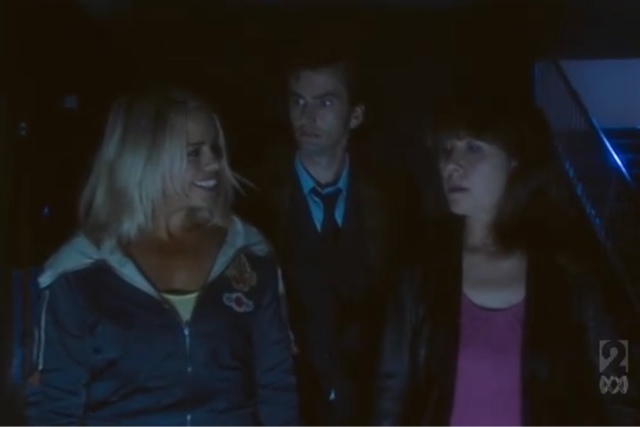
Review - School Reunion

A couple of old favourites of mine returns to crank up the nostalgia in School Reunion.


Season 2, Episode 3 - School Reunion

We get thrown straight into this story with The Doctor appearing to be well into his investigation. It had me fearing a Go, go, go, Geronimo! situation, but in the end the pacing ended up quite good. It's obvious from the start that the Headmaster Mr Finch (deliciously played by Anthony Head) is up to something. Hell, we all but see him eat a poor orphan.

Apart from the obvious child chomping, we see the students are being used to do... something. Something with computers and crazy spinning cube graphics. It seems to involve a lot of randomly tapping at the keyboard.


We're trying to get the complete works of Shakespeare.

The Doctor and Rose manage to draw out clues about what's going on in a timely and natural way. Mickey reappears to show us all how he's not just a buffoon, at least not a total one, with his hacking skills getting stronger. And of course we get the wonderful Sarah Jane Smith return. Sarah Jane is an all time favourite companion of mine, so it would be tough for this episode to go too far wrong for me.

The monster reveal stumbled a bit though. It was a reasonable idea to give a glimpse of the undisguised Krillatine under the desk, but it ended up being entirely too much of a glimpse. The transition as he stands up was really smooth though. 


A network cable is unplugged.

We saw a little bit of Deus Ex Screwdriver with a good old Deadlock Seal sitting there like a lump of kryptonite. That didn't end up hampering them much though. The Doctor spent more time investigating what the Krillitines were up to than he did working out a way to stop them. Hell they all spent more time gabbing than even investigating. Despite all that, it worked quite well. 

A big part of this episode deals with that culture shock of a returned companion. This was touched on in The Parting of the Ways with Rose's big emotional speech in the chip shop. Sarah Jane shows us that the displacement felt by Rose at that point never really goes away. Elizabeth Sladen really conveyed the conflicting emotions of joy and resentment a dumped companion would feel. 

Despite their common ground, Rose and Sarah Jane get to be delightfully bitchy with each other at first. Mickey seems to take particular delight in this situation. I think I would too. 


The girlfriend and the ex. Welcome to every bloke's nightmare.

Mickey also delights in rubbing it in to Rose that The Doctor seems to have a thing for traveling with young girls and then upgrading.


I'd go easy on the chips.

This is all a reasonable indication that Mickey is at least a little over Rose at this point. Rose, on the other hand still seems to be trying to keep Mickey on the bench, asking if the situation at the school was the only reason he called, and giving him the flirty eyes. Even at the end of the episode when Mickey decides to join The TARDIS crew, Rose looks really pissed off.

Hey Rose! The boyfriend and the ex. Welcome to every girl's nightmare.

This episode hit me square in the nostalgia, with a bunch of references to old episodes. It moved forward at a decent pace, and despite a lot of interplay between characters it never got bogged down or felt too "talky". Even the Bond Villain explanation of his plan by Mr Finch seemed sort of natural and The Doctor's temptation in the face of his offer seemed genuine. This one is very much a favourite.

9/10


Can we fix it?


Just a couple of tweaks to this one, I think. First up, that initial monster reveal was too much. It needed to just be a quick flash of something inhuman under the desk before the teacher stood up. Looking right at the kid and screeching was over the top and ruined the full reveal later. Just his eyes would have been enough.

Putting a Deadlock Seal in there was a bit lazy. There's several other ways they could have kept The Doctor out of the gubbins. Perhaps there was a booby trap, or breaking in would cause a feedback loop into the kids' minds. The enhanced state the kids are in could leave them open to psychic distress or something. Not hugely important, but an easy fix.

More K-9 would have been nice too, but the episode is already crammed full, so I couldn't begin to suggest where he could fit.

Wednesday, 1 May 2013

Review - Journey to the Centre of the TARDIS

On the surface Journey to the Centre of the TARDIS seems alright, but when you get down to it, it's riddled with little problems that make it almost totally unengaging.


Season 7, Episode 10 - Journey to the Centre of the TARDIS

When I first heard the concept of this episode, I was expecting a thinly veiled excuse to reference previous episodes from the past 50 years. To be honest, I was kind of looking forward to that. Like a Where's Wally (or Waldo depending on where you're from) for hardcore Whovians. There was a little bit of that, but it was misplaced and quickly abandoned. It was great to see the Eye of Harmony and other references like the pool and the library, plus there were a few objects for sharp-eyed fans, but so much more could have been made of the time echoes. It was nice to hear the voices from the past, but some footage would have been good too. It may have been difficult, but I don't think impossible.

The story itself wasn't a bad idea. Sadly it stumbled on more than one occasion. The monsters were reasonably creepy, but there was no explanation as to why they would be violent. Without any motivation for their violence, I'm left feeling they were just included because... well... you've gotta have a monster. They didn't really need to be there because there is already a bigger threat, the TARDIS itself. Hey, I'm sensing a pattern.

Overall the structure suffered in the middle. Things got a bit Go, go, go, Geronimo! because there was no distinct investigation or escalation phases. The monster reveal was poorly handled, with them being almost immediately visible and violent, with none of the slow build-up that makes for a good episode.

The pacing also suffered due to the characters' inability to remember how scared they are. Even after the death of Bram, Gregor remained focused on salvage. I know this was supposed to be in his character, but selfishness isn't stupidity. I'd expect a desire to save himself over claiming salvage. We also see Clara one minute running from one of the perusing creatures, the next happy to stop and wonder at the various rooms she passes. She even takes some time to have a read of a book that shouldn't really have caught her attention beyond it being sat on a pedestal. Clara hasn't been introduced to the Time War, and so it makes no sense for her to feel a need to read so pressing that she forgets the creepy burning zombie that she's running away from.

I'm curious as to why The Doctor didn't try more forcefully to stop Gregor from taking the circuit from the TARDIS' architectural reconfiguration system. I'm glad he was non-violent and didn't just do the standard "angry Doctor yelling" bit, but he just acted like a whiney little kid who's had his toy nicked by the schoolyard bully. He completely failed to convey the danger of its removal, so I can totally see why Gregor didn't think it was that big of a deal. The Doctor didn't even raise an objection when he threatened to blow the wall up.

The sub-plot with Tricky not really being an android seemed really tacked on. Maybe they wanted the minor characters to still have an arc that left them better off for their contact with The Doctor, but all it really did was chew up screen time with a bunch of angst that didn't really add anything. And why did the fact that he could sense the TARDIS' pain come up so often? The natural assumption is some kind of machine empathy, but then it's not fully explained after we find out he's human.

The scene on the cliff could have really dripped with Hunka hunka burning Doc, but was actually rather restrained. It could be taken either way, and so I'll give it the benefit of the doubt for now and assume it was a platonic mixture of friendship and fear. That said, the scene itself was pure Companion Show featuring The Doctor, rubbing the season arc in our faces.

The ending was rather rushed and wasn't internally consistent. If the magnetic beacon that The Doctor wrote on was from his timeline, how was it able to shut off the tractor beam in the past? Surely there would still be an active beacon there that was causing the issue. Either way, the resolution seemed to me to be engineered entirely to create a situation whereby Clara could discover The Doctor's name and then forget it. An unfortunate case of season arc influencing story.

And did "new timeline Tricky" know who he was, or was he was still under the impression he was an android? It was a bit sad if he was.


'Hey, Robobitch! Make me a sandwich.'

Ultimately this episode had potential, but failed to deliver. Too much time was spent on the minor characters and not enough on exploring more of the TARDIS. The monsters were an unnecessary inclusion and the Deus Ex Machina ending (A reset button? Really?) was almost, but not quite, a slap in the face.

4/10


Can we fix it?


The problems are all over the place with this episode, so it could be tough to come up with a simple fix. I think the first point to deal with is the salvage crew. They need to be a bit better defined. Gregor is greedy, self important and won't listen to anyone else. He is a villain and will not change. Bram is the big dumb one who goes along with whatever Gregor tells him simply because he thinks he's too stupid to have an opinion. Tricky is introduced as an android, but makes no special mention of the TARDIS' feelings. He questions Gregor frequently and is clearly in the right with most decisions, but defers to the Captain as is his place.

We open the same way with reference to the TARDIS not liking Clara, which would be the only reference to the season arc in the episode. The TARDIS crashes the same way (but without the beacon) and The Doctor gets the salvage crew into the TARDIS the same way, but once inside, things go differently.

The major fix would be with the monsters, and the best way of doing this is to change the way all of the time echoes are handled. The echoes themselves should get increasingly real, starting off as barely heard voices and just glimpsed shadows. This allows for some footage from very early serials to be spliced in, even if it's just a ghostly William Hartnell standing there talking, or one of the old companions.

With no monster threatening her, Clara's journey of discovery (and our journey of re-discovery) can be a bit more quaint, finding rooms and objects from The Doctor's past and chasing voices and half seen strangers through the corridors. She may see the History of the Time War, but she doesn't read it. The book exists purely to tease fans who would fantasise about being able to read it. As the episode progresses, the time echoes get closer to the present, and more real. The voices are clearer and the visions more solid, until we start seeing a few seconds into the future. In fact, we could have Clara chase an echo of herself chasing her echo deeper into the TARDIS.

Meanwhile, The Doctor and the salvage crew start their search and decide to split up, but Gregor and Bram go off together, following the scanner's directions to the architectural reconfiguration system. The Doctor and Tricky also experience some time echoes, and at first The Doctor dismisses them as the TARDIS venting some pent up time energy from the crash or some such, but he gets increasingly worried as the echoes get stronger.

At this point The Doctor finds Clara just as she's about to touch one of his echoes. He explains that the echoes are like ripples in a pond; at the edge they're weak but the closer to the disturbance the stronger they get, and that coming into contact with them would cause an energy backlash that would kill you. Whatever caused the disturbance will soon happen, and The Doctor doesn't think he can stop it because technically it's already happened.

By now Gregor and Bram have found the architectural reconfiguration system. When they take the circuit, the TARDIS begins quaking, and it is only now that the TARDIS begins reshaping herself. The Doctor notices what's happening and confirms the problem through an interface panel (rather than just waving his wa... I mean screwdriver). The TARDIS is using too much energy reconfiguring itself and can't contain the power overload.

Gregor and Bram wander around the corridors of the TARDIS until they finally have a run-in with the burning zombie echoes, but now instead of outright attacking, the echoes simply shamble towards them. It is fear of the how the creatures look that makes the brothers run as opposed to them actively trying to attack. During their flight, Bram pushes a zombie away with his pick. The pick freezes and shatters, causing a cold burn up his hand and arm.

The Doctor leads his group towards the heart of the TARDIS, which they need to access through the Eye of Harmony. Now they have a run-in with the burning zombies, and The Doctor gets very worried. They meet up with Gregor and Bram and keep running from the zombies. They get trapped in the Eye, but because the TARDIS removed the doors. At this point The Doctor demands the return of the circuit, with Gregor refusing. The Doctor explains that the Zombies are future echoes of themselves burned to a crisp because of him, and Bram and Tricky demand he comply. Gregor continues to refuse, claiming the Doctor is tricking them out of their pay. Tricky tries to talk him down, but Gregor yells that he's the Captain and to stop questioning his orders, he always thinks he knows better etcetera, and eventually a fight breaks out. Tricky recovers the circuit but Gregor goes over the edge, dragging Bram with him.

Tricky tosses the circuit to The Doctor and goes to help Bram who's hanging from his uninjured arm. The Doctor fiddles with the circuit and Tricky grabs Bram as we see the zombies have reappeared at the far end of the gantry, slowly advancing. Tricky struggles to lift Bram who tells him to let him go and save himself. Tricky refuses, saying he is expendable. Bram reveals Tricky is human and his younger brother. The Doctor activates the circuit *sigh* with the Sonic Screwdriver I suppose, reinstating the doors and creating a platform that lifts Bram back up. We see the zombies fade away as the group leaves the Eye of Harmony.

As the group enters the heart of the TARDIS, it is on the verge of meltdown. The Doctor begins doing some jiggery pokery as Bram explains the situation to Tricky. The story would remain the same, except with an implication that Gregor may have caused the accident that injured Tricky as a means of getting rid of his father's favourite and claiming what he saw as his birthright.

The Doctor manages to vent the built up energy, resulting in a wonderful collage of clips from the past 50 years, and everything is wrapped up nicely, with Tricky taking over as Captain.

With this we get a much longer nostalgic walk down memory lane, and a better buildup of the threat level. We have a clear villain with a better motivation for his lies than "it was good for a laugh," and who is killed for being stupid and greedy. Plus it's a much clearer resolution for poor Tricky. We also avoid getting bogged down in the season arc too much and don't have to resort to a weak "reset button" ending.

Monday, 29 April 2013

Review - The Bells of Saint John

I thought I'd start my reviews and suggested fixes with the opener for the second part of Season 7. So let me say up front that The Bells of Saint John is a prime example of how not to do a Doctor Who episode.


The Bells of Saint John - Season 7, Episode 6

We start with some "previously, on Doctor Who" dialogue and the (admittedly amusing) joke about the titular bells. This sends The Doctor off to meet Clara again to find out how she got his number. After an attack by one of what is undoubtedly Moffet's worst monsters yet, the Spoonheads, The Doctor seems to immediately forget what brought him there in the first place and reverts to default "coax the young girl into the van" mode. This reeked a bit of TheCompanion Show, featuring The Doctor, but in all fairness, we've had to treat each encounter with Clara as a re-introduction, which puts her character at the forefront.

The Spoonheads themselves are a very poor monster because they are no real threat. They are sort of creepy in that "crazy person standing and staring" way, but The Doctor can just scramble them with the Sonic Screwdriver and they're gone. Boring! I felt the invisible threat of all encompassing WiFi to be much more disturbing that stupid robots with no back of their heads.

As a positive, there isn't all that much Deus Ex Screwdriver in this episode. The Doctor uses the Sonic to disassemble a Spoonhead (a process he is shown taking some time to do), but does the majority of his problem solving through bulk-standard "hacking" with a laptop.

The episode suffers badly from Go, go, go, Geronimo! The Doctor is running around in a manic whirl trying to impress Clara more than solve the problem. In fact, the problem seems to solve itself. The resolution seems rushed, and is pretty much the classic "hit the self destruct and run out the secret tunnel" villain move. Totally unimaginative, and a huge let-down.

3/10


Can we fix it?


I think with a few changes this one could be fairly reasonable. The basic concept of WiFi hacking of people was interesting, but it was diluted by the ridiculous Spoonheads and Clara's re-introduction to The Doctor.

First up, I'd remove the Spoonheads. They are stupid, pose no real threat and exist purely as low level goons for The Doctor to defeat easily. The main threat of this episode it the WiFi itself, and there is no need for robotic mobile WiFi towers because as was pointed out several times in the episode, the majority of London would be covered by some WiFi or other. We would see the Uploaders ijacking routers and mobile phones to act as new nodes for their WiFi network, thereby turning our own tech against us, which is far more insidious in my opinion.


The Never-should-have-beens


The concept of hacking people to change their "stats" was also interesting, but I would prefer to have seen it as a parasitic leeching of those stats from other hacked people, using their "processing power" to perform your own tasks. If one of the agents wanted to buff their creativity or intelligence, they would be drawing it from another person. In this way, people aren't necessarily dying in front of their computers, just becoming increasingly stupid (see the metaphor there?). We hear the old "the farmer loves his flock" metaphor, but I prefer "why eat chicken today when you can have eggs forever?" Eventually they would be totally uploaded to the Cloud and consumed, but not at the rate the episode implied (surely people would have noticed that).

I also feel The Great Intelligence shouldn't have been so explicitly revealed as The Client in this episode. I would have preferred it as just being a voice on the phone, and one we can't hear at that. Most viewers would likely guess The Client is The Great Intelligence, but being less obvious creates that "aren't I smart" reward for those that need that kind of thing.

So, as the episode starts we have The Doctor get his phone call from Clara looking for IT help. This scene could play out almost the same until The Doctor gets to Clara's house. At this point, instead of rescuing Clara from a Spoonhead, The Doctor presses the matter of the person who gave her his number, all the while Clara is being integrated.

The Doctor convinces her to take him to the store where she got the number, and during the walk there we get some introductory small talk showing that she is smart and quick witted. Maybe we even have a guy staring at his phone almost run into them before saying something stupid like, "LOL! Soz mate!"

Here we see more of the Uploaders doing their hacking and stat boosting with exposition of how it works. We see Clara is now fully integrated and they hack her to switch her phone's personal hot-spot on, creating another Wi-Fi node.

Clara comes out of the store and tells The Doctor that the woman who gave her his number wasn't there, and the funny thing is the store owner said he didn't have any female employees. The Doctor asks Clara what the woman looked like, but as Clara begins a vague description, she exhibits signs of a drop in intelligence and focus, umming and aahing and getting distracted before The Doctor can get anything useful out of her. At this point The Doctor becomes concerned about what's going on, perhaps looking around and noticing a lot of people on laptops, tablets and phones all zoned out or acting stupid.

The Agents are seen discovering The Doctor on Clara's WiFi and begin integrating him, only to notice it seems to be taking ages. They get Miss Kizlet and explain that the speeds are fine, he's just a huge file. She goes off to talk to The Client, and tells them to keep integrating. When she returns later she orders all available bandwidth put on downloading The Doctor to the Cloud.

The Doctor makes the connection to the intelligence drop and the WiFi, and takes Clara on board the TARDIS to escape it, at which point we see The Doctor is at 99% downloaded. The Uploaders puzzle over how he disappeared from WiFi range in the middle of London and Miss Kizlet goes to convene with The Client again. When she reappears she tells the other Uploaders to look for a Blue Police Box.

Clara recovers in the TARDIS and The Doctor does some exposition and wondering aloud how he can defeat the Uploaders whilst examining Clara's phone. He eventually gets on to viruses, and this gives him an idea. We see him sit down and begin meditating.

Eventually the Uploaders have scoured London and have found the Doctor's TARDIS and surround it just as he exits. At this point his download resumes, clicks over to 100% and The Doctor falls unconscious to the ground. We see Miss Kizlet observing The Doctor in the Cloud monitors, but unlike the other inhabitants of the Cloud, The Doctor says he knows just where he is. At this point the system goes haywire, Uploaders begin resetting and those with bodies to go to begin to return.

Miss Kizlet runs to her office and calls The Client, whom we gather from her end of the conversation is abandoning her. She gives the "I don't know who I'll be without you" line before The Doctor's brain hacking of the Cloud resets everything and UNIT arrives to find the Woman-child Kizlet on the floor of her office.

Post resolution wrap up would be similar, with the addition of Clara having large gaps in her memory, and not remembering the woman who gave her The Doctor's number at all.

Boom! Job's a good 'un.

I'd love to hear what you guys would have done differently.

Review - The Rings of Akhaten

The alternate title for The Rings of Akhaten should be "What The Hell Was That?" There were a few glimpses of good ideas, but the whole thing somehow felt not fully formed.


The Rings of Akhaten - Season 7, Episode 7

The bookends of this episode push into The Companion Show featuring The Doctor territory, but the opening does set up the resolution rather well, so I can forgive it a bit. Overall the episode suffered from Go, go, go, Geronimo!, perhaps because we lost the entire pre-credits opening to Clara's background, which meant the build up and exposition in the markets were rushed as we barreled towards the epic confrontation that was more monologue than practical solution.

The concept of sentimental items as currency is interesting, and reminded me of the episode of Red Dwarf called Polymorph II - Emohawk, in which the GELFs are said to trade in emotions. Clearly this economy has developed due to the rituals to keep Grandfather asleep requiring lots of these objects, but the concept seemed a bit too ethereal for a science fiction show. The markets themselves were a nice touch, but much like the Mos Eisley Cantina in the original Star Wars, many of the denizens seemed rushed or poorly realised.

We have a nice use of Clara outside of the bookends using her mad child-rearing skills to calm a scared little girl called Merry. Clara doesn't seem to be falling for the Hunka hunka burning Doc, and I can't recall any In-Who-Endos, so that's a positive. The relationship between Doctor and Companion seems to be simply platonic for the time being (despite the kiss with Victorian Clara in The Snowmen).

Unfortunately the creatures that come for Merry, the Vigil, are grossly underutilised. They are quite reminiscent of the Spoonheads from The Bells of Saint John in that they turn up, act a bit creepy and don't really pose a threat. And then they just disappear. Then we have the mummy, which is thrown out there as a red herring appearing just to vaguely menace the characters without actually posing a real threat before simply being tossed aside from the narrative.

Grandfather itself was very poor. It looked like they couldn't be bothered to animate both sides of its face, so just mirrored it. And it was simply awful. CG is good and all, but I get the feeling a guy with some minor prosthetics and a bunch of light filters would have looked way better. Sometimes the old ways are best.

We had some significant Deus Ex Screwdriver in this episode. They seemed to be making a joke about it with The Doctor not wanting to give it up because "it's useful sometimes". That said, we end up in a situation where The Doctor can't open a door because its a special kind of... oh wait actually he can open it. What was with that? Then of course he uses it to hold off the Vigil just as they are looking like they could actually pose a threat. I can't work out whether it was better that it wasn't the Screwdriver that destroyed them or worse because they were never really defeated.

The ending was overly dramatic and slightly nonsensical. What was Grandfather eating from The Doctor? Was it his emotions? His memories? Either way it seemed to have consumed quite a bit of whatever it was, and yet The Doctor remained unchanged. Where was this sacrifice we heard all about? All up the ending felt a bit too "magical" which was slightly jarring.

I reckon a bit more science to that fiction would have been good.

3/10


Can we fix it?


There's a few things we need to do to get a decent story out of this, and most of them relate to exposition. We need to know more about how this sentimentality economy works, and more about the structure of the religion. Both are clearly relating to history, with the Queen of Years having to learn all the stories and songs and an item's provenance being of more worth than it's materials. The connection here is subtle, but it seems to imply that they are trying fatten the Queen up with history to make her a tasty morsel in case her sacrifice is required. I don't think this was made clear enough through all the singing and space bikes.

I would have liked to see something used in the markets to weigh the sentimentality of an item. A savvy space merchant isn't going to take your word on being attached to something and I can't believe that all of the species trading in the market have some kind of psychic ability to determine the value.

Some more interaction with other members of the religion would also have been good. We had a brief moment with the Chorister, but apart from singing, we get nothing. A bit of exposition from him, or someone else explaining the ultimate purpose of the Queen of Years would have helped keep things straight. They could even bee kind about it, telling her she's doing a great thing and other placations.

I'd have dropped either the mummy or Grandfather, as along with the Vigil there are too many monsters here. If the mummy is to be a red herring, it shouldn't come to life. We should be made to feel like it might right up to the point it's revealed the planet is the enemy. There's plenty of reasons a mummy would be interred in the holiest place of a religion.

The singing needed to be cut back too. It was quite out of place, and really only served to be a dramatic soundtrack to The Doctor's monologue at the end. The monologue also needed to go. It was way too much for anything other than a pre-regeneration season finale.

So ideally I'd have the episode run the same up until we get to the markets, where we get more of that explanation of the economy, perhaps with The Doctor showing the link between this form of trade and the big ceremony. Maybe we even have a member of the priesthood appear to tell them about it. Tourists clearly aren't unusual and the priests would be keen to get followers or at least participants. We learn from the priest that the ceremony is to commemorate their God defeating and imprisoning an evil and destructive enemy (Grandfather is a silly name, so something better should be used).

While the priest is putting the hard sell on The Doctor, Clara notices Merry and follows her. This gives a decent reason for The Doctor to disappear. The scenes with Clara, Merry and the Vigil were fine and would stay as is, with the addition of an explanation from Merry that the Vigil were her bodyguards. When Merry returns, it is to the Vigil, not to priests.

When we get to the ceremony, The Doctor reiterates the offering of psychically charged items and wonders where the pure psychic energy is going. We can keep the singing if they really want, if only to allow us to cut between Merry and the Chorister to imply the mummy is the enemy.

In the pyramid other priests are ritually monitoring archaic machines. One of them comments that the energy levels are low, and the offerings may not be enough. The high-priest sadly orders the Vigil to collect Merry in order to make up the difference.

The chase would play out the same except it is the Vigil who take Merry from the ceremony, rather than a beam of light.

While The Doctor and Clara are running off to get the space bike (I'll let them keep that one) the priests are explaining to Merry that her sacrifice is needed to stop the enemy ravaging the seven systems (let's keep it local for a change). The Doctor and Clara burst in (because the Sonic Screwdriver has no problems with the door) and The Doctor demands to know why they need to sacrifice her.

The priest reveals that the pyramid is a giant psychic syphon that powers an energy shield generator designed to keep the enemy imprisoned. Clara taps on the glass case with the mummy saying it looks like regular glass to her. The Doctor looks out of the window at the now raging planet and tells her that's not the enemy.

The priest goes on to say that the mummy is the creature who first imprisoned the enemy, now risen as a god for his sacrifice to power the shield generator. The Doctor refuses to let Merry die, offering himself in her place. Clara points out that the device killed the mummy, but The Doctor explains that it runs on history, and he's got a lot of history.

Clara takes Merry back on the bike as the pyramid begins syphoning The Doctor's energy. The end plays out in a similar way except without the epic monologue. When Clara returns with her leaf, weakly and tearfully trying to save The Doctor, her words about the potential futures missed by her mother spark The Doctor, who manages to rewire the pyramid to work on potentiality rather than history, possibly by reversing the polarity of the neutron flow. This allows them to power prison forever using just Clara's leaf.

Similar wrap up with some resolution on what the priesthood will do moving forward. Clara's epilogue could remain unchanged.

I know a lot of people didn't like this episode, so how'd I go at fixing it?

Sunday, 7 April 2013

Go, go, go, Geronimo!

What do I mean by "Go, go, go, Geronimo!"?

Well this is my catch all term for the pacing problems many episodes of Doctor Who seem to suffer from. Often things are happening at break-neck speed, and major elements seem overly rushed. For whatever reason we get flung towards the resolution without really feeling any real involvement, tension or wonder.

When the series was rebooted in 2005, I was immediately concerned about the loss of the serialised format. Even with a slightly longer running time it just wasn't going to be able to do what a four-parter could.

Traditionally the structure of a Doctor Who story was something like this:

Part 1 (Introduction)
We're given a glimpse of the problem. Maybe the Monster of the Week (MotW) interacts with or kills someone, but we don't see the MotW itself. If necessary, we get "Monster Vision". The Doctor turns up and is intrigued by whatever is going on. Maybe he meets some friendlies with tales of woe, maybe he runs across one of the MotW's agents. The episode usually ends with some "Monster Vision" or perhaps a tiny glimpse of part of the MotW if it won't give them away too much.

Part 2 (Investigation)
The Doctor starts sticking his beak in. Roadblocks appear in whatever relevant manner. Perhaps the problem is complex, or he needs someone's help or cooperation and they're not forthcoming. We get insight into what the problem is and why we should be concerned, usually through The Doctor interacting with his Companion. Meanwhile the MotW or its agents continue with their schemes, reacting to The Doctor as needed. The episode ends with a full reveal of the MotW.

Part 3 (Escalation)
The MotW and any minions enter the "end game" phase of their plan, ramping up the threat level considerably. The Doctor needs to push himself to come up with or complete a solution. The Doctor's Companion will (either here or at the end of the previous episode) fall into the clutches of the MotW and either require saving, or somehow save themselves (this is the new millennium, after all). We are shown a very real threat by the bad guys here. The episode ends with the MotW seemingly on the brink of victory.

Part 4 (Resolution)
The solution The Doctor has been striving towards comes to fruition after a final showdown with the MotW. Once victorious, The Doctor does some tying up of loose ends with the good guys and trots off in the TARDIS.

Now you can see a similar structure in use in the new episodes, but it is so highly compressed it loses a lot of the tension. This is especially evident when we get the occasional two-parter, which allows for closer to the same amount of screen time as an old-school three or four parter.

Two-parters like Rise of the Cybermen / The Age of Steel, The Sontaran Stratagem / The Poison Sky, and The Hungry Earth / Cold Blood don't suffer from these pacing issues and very closely fit the traditional structure with two parts instead of four. Whatever other issues those stories may have, Go, go, go, Geronimo! isn't one of them.

As the overarching season plots become more of a focus for the show, they are in danger of overtaking the individual story plot. The more time taken to foreshadow these big stories, the less time is left to make the current one work properly. The best way to introduce the season arc has always been to make subtle references to it. Bad Wolf, Torchwood, Saxon and the Crack in the Universe were all handled reasonably well with only subtle references during or at the end of individual stories. The Silence and Clara arcs are far more blatant, and often detract from what should be the focus of the episode by taking up screen time, or feeling forced in. In some ways this is a symptom of The Companion Show featuring The Doctor.

Not every episode needs to reference the season arc, and even if they don't, the season arc story can reference the other episodes. Vincent and The Doctor is a prime example of this. It had no direct reference to the season arc, but was drawn into the opening of The Pandorica Opens.

Can we fix it?


I suppose the issue is simply one of time, which unless all stories become two-parters isn't very easily fixable.

But if we want to stick to a single 45 minute episode, can we fix the pacing? Well there are single part stories that are paced well, such as The Doctor's Daughter or The Curse of the Black Spot. So what are these episodes doing that others, such as Dinosaurs on a Spaceship or The Bells of Saint John are not? I'd suggest it's what they choose to skip or condense in the structure that makes the difference.

In my two positive examples, The Doctor foregoes a lot of Introduction and is thrust immediately into the problem, jumping straight into Investigation. Escalation happens almost simultaneously with Investigation too, allowing both of these phases to have some meat to them. This allows the threat to seem credible and the eventual solution to seem well thought out and not some sort of rushed handwavium.

In the negative examples, we get too much Introduction and not enough Investigation or Escalation. We get walked through a new setting or some new characters with cursory (and often unsubtle) explanations of the problem, but no real sense of threat. The endings are also rushed, which actually further downplays any sense of threat we may have got by making it seem too easily overcome.

So in short, chuck The Doctor in the deep end, have him work things out as the problem gets increasingly dangerous, and make sure the final confrontation is a risky, down-to-the-wire solution that The Doctor has pushed himself to achieve.

Or maybe they should just make all stories two-parters.