Showing posts with label The Companion Show featuring The Doctor. Show all posts

Wednesday, 1 October 2014

Review - The Caretaker

Clara's two worlds combine as The Doctor does a bit of moonlighting at the Coal Hill School in The Caretaker.


Season 8, Episode 6 - The Caretaker

This episode begins with a montage showing Clara struggling to live two lives at once, her "normal" life as a teacher with Danny Pink, and her life adventuring in time and space as The Doctor's Companion. This whole montage draws the parallel of a woman cheating on her partner, and in that it succeeds reasonably well. We get the distinct impression that something's going to give pretty soon.

After The Doctor leaves Clara behind to go "Undercover" She appears to have time to focus on Danny, but naturally The Doctor is going undercover at Coal Hill School as John Smith, the temporary replacement Caretaker. Hilarity ensues.


I love a comedy dust-coat

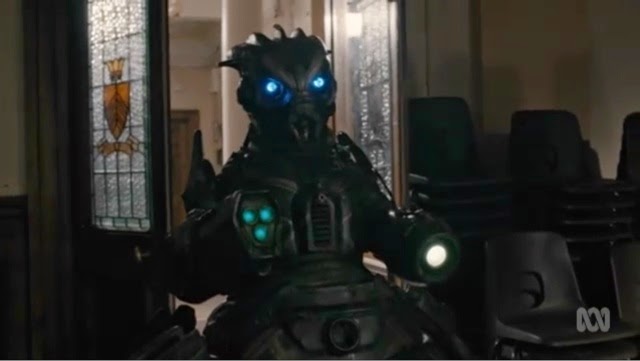
The Threat of the Skovox Blitzer is fairly minor, which is fine, because The Doctor straight up tells us he can handle it easily. There is no discovery of the threat, as The Doctor already knows about it. There is no investigation, as The Doctor already has a plan, and even when that goes wrong he seems to figure out a fall-back plan with minimal fuss. Sadly, if the majority of screen time doesn't even involve the monster of the week in any way, the focus of this episode becomes Danny's discovery of Clara's life with The Doctor.


Pictured: minor sub-plot

This all puts the episode squarely in the category of The Companion Show Featuring The Doctor. In retrospect this has been a bit of a trend throughout the season, particularly in Listen, but so far it's not taken up the majority of an episode. I thought (or hoped) we'd gotten past this issue once Clara stopped being The Most Important Person In The Universe™. Once the mystery of her origin was solved, she could become just another travelling companion for The Doctor. Hopefully the resolution of the Danny situation will reduce the focus on Clara and allow The Doctor more time in the limelight.

The scene with The Doctor mistaking Adrian for Clara's boyfriend was strange and has left me feeling a bit annoyed. There's two ways to take this. One, general arrogance from The Doctor that Clara would want someone who looked like he did, because that means she still wants him; or two, a fairly obscure kind of paternal feeling where The Doctor would only approve of someone who was somehow like him. I'd like to think it was meant to be option two, but something tells me that's not really what they were going for here.

The Doctor's irrational hatred of soldiers outlined in Into The Dalek was clearly designed to work with this episode, but despite this not fitting with established canon (The Doctor has been friends with several soldiers), Danny's response to The Doctor was actually pretty awesome.

Yet again we are treated to a scene in the Nethersphere, but this time Missy seems to have her cranky pants on and is reportedly "too busy" to deal with the poor dead policeman. For the first time since the Promised Land arc began, I am actually intrigued. I still don't really care who Missy is, but my interest is piqued as to why she would be annoyed.


Maybe ask for that raise another time

Overall, this is a pretty nothing episode. It does well enough considering it's entire point is to get The Doctor and Danny introduced to each other, it's just I like my light science fiction show about aliens and time travel to focus a bit less on a single character's love life and more on, you know, the aliens and time travel.

6/10


Can we fix it?


I wouldn't go so far as to say it was impossible to fix this one, but it would take a lot. The threat of the Skovox Blitzer would need to be somewhat enhanced to start with. More needs to be made of The Doctor discovering it and deciding to get the job at Coal Hill. It would also be good to find a way of pushing the Clara / Danny thing to the background a bit.

First up, The Doctor would not refuse Clara's help. She would refuse to help him. The Doctor discovers the Skovox is around, and comes to Clara asking for help. Before he is able to explain the threat or how she is needed, Clara refuses on the grounds she needs to concentrate more on Danny, telling The Doctor she's sure he can handle this one alone.

What we don't learn immediately is that The Doctor wanted Clara's help to place the devices around Coal Hill, which he has determined is the best place to displace the time vortex because of a weakness in the space / time etc. When Clara refuses to even listen, he is forced to assume the position of Caretaker in order to follow through with his plan.

When Clara berates him and he reveals what the threat is, The Doctor can then throw Clara's own words back at her, telling her he can handle it himself. This would also add another dimension to the negativity towards Danny. The Doctor is jealous, but not in a romantic way, just that Clara's attention is elsewhere. Why is spending time with him more important that fighting alien robots? The Doctor could even specifically ask her that, only to be answered with Clara's revelation that she loves Danny. There's really not much you can come back with at that point.

So in true Doctor fashion, he just throws a tantrum at Danny and blames him for the failure of Plan A. The rest would probably have to play out in a similar manner, except have Parent Teacher Night held in the same hall the Time Vortex is set to appear in, increasing the threat to innocent bystanders. They think things will be okay, but when the Vortex begins to appear earlier than The Doctor calculated, they resort to pulling a fire alarm or something to get everyone out.

It wouldn't be great, and would still suffer from being focussed too much on Clara's relationships, but it would have a more solid set-up and make slightly better use of a deadly alien robot.

Wednesday, 20 August 2014

Season 2 wrap-up

With my reviews of Season 2 complete, it's time for another season wrap-up.

My scores

Episode 1 - New Earth                         5/10
Episode 2 - Tooth and Claw                 8/10
Episode 3 - School Reunion                  9/10
Episode 4 - The Girl in the Fireplace   8/10
Episode 5 - Rise of the Cybermen         8/10
Episode 6 - The Age of Steel                 8/10
Episode 7 - The Idiot's Lantern             8/10
Episode 8 - The Impossible Planet        8/10
Episode 9 - The Satan Pit                     8/10
Episode 10 - Love & Monsters             5/10
Episode 11 - Fear Her                          7/10
Episode 12 - Army of Ghosts               9/10
Episode 13 - Doomsday                       8/10
                              Season Average = 7/10

After a poor start with New Earth, we settled into a fairly solid season until Love and Monsters sends it all crashing back down. We didn't quite get any 10/10 this season, although School Reunion was very, very close.


Yes!


No!

Ongoing problems


How does this season stand up with regards to my pet peeves? Well, Season 2 saw:


We see a continued reliance on the Sonic, with three episodes using it in silly ways or having to specifically lock it out. However, this was balanced by several episodes where The Doctor used other devices to achieve a goal that I feel in more recent times he would have used the Sonic for, so that was nice.

Overall, the instances of these problems seemed to be less frequent this season, which could have contributed to the fairly consistent high scores I've given them. The main fixes I applied to these episodes have been tightening up the story and closing plot holes.

Season Arc


The Torchwood arc started off rather subtle, but like the Bad Wolf arc, the hints sometimes felt forced.


Subtle is good.

All up, the concept of Torchwood was probably a little easier to work in to the various stories than the phrase "Bad Wolf". References to Torchwood all seemed relatively natural, apart from maybe The Captain's reference in The Satan Pit. I suppose it also helps that Torchwood is an organisation that can have an impact on many aspects of The Doctor's adventures.

References to the series arc were far more sparse this season, with just under half the episodes featuring a reference (6 out of 13), compared to nearly all episodes in series 1. The first mention of Torchwood in Season 1 could go unnoticed, but its impact in The Christmas Invasion makes it clear that whatever it is, it's powerful and possibly dangerous. Our first reference in Season 2 proper outright states what it is, so although we are yet to see what Torchwood becomes, we already know from the outset broadly what it is.

Could this have been handled differently? Maybe. If the origin reveal had come later in the series, the references would have been a bit more mysterious. Swapping Tooth and Claw with Fear Her could help a lot, meaning that by the time we see Torchwood's origin, we have already been teased with multiple Torchwood references. We would also jump straight from that origin to the modern organisation in Army of Ghosts.

Either way, easing up on the number of references and making them feel less forced improves the series arc tease immensely, and makes it feel a lot better integrated into the individual stories.

Thursday, 12 December 2013

Review - The Girl in the Fireplace

The Doctor learns how to "dance" with the first in a long line of female historical figures in The Girl in the Fireplace.


Season 2, Episode 4 - The Girl in the Fireplace

Yo Dawg! I heard you like time travel, so I put some more time travel into your time travel show. This episode makes extra special use of time travel. The idea of one participant in the story taking the long road whilst the other skips ahead is very interesting. Of course the episode is apparently loosely based on The Time Traveller's Wife, so we cant award too many points for that. We do get more touches of the culture shock theme, with Reinette having that same "left behind" experience. She handles it much better than Rose or Sarah Jane though.

We skip between a space ship in the far future that's been repaired using bits of its crew, and pre-revolutionary France. I liked the way the characters were split between the timelines. It gave Rose and Mickey a chance to prove themselves without The Doctor. This opportunity could have been exploited a lot more than it was though, as the episode was squarely focussed on The Doctor, almost the complete opposite of The Companion Show featuring The Doctor. Strangely this is almost as bad as focusing on the Companion more than The Doctor. There really does need to be a good balance.


You stay here. I've got to sort someone out.
THING!
Sort something out.

Our main monster is the Clockwork Robots, who again fit the mould of advance slowly and be creepy. They work in this story though, despite no explanation of why they are made of clockwork. I mean a teleport, no matter how short-range, must require a power source beyond mere clockwork.


As if the French aristocracy wasn't creepy enough.

The whole episode is pure Hunka hunka burning Doc though. Reinette jumps The Doctor's bones with little more than two brief meetings when she was a little girl and a five minute conversation under her belt. Moffat keeps the dance metaphor going strongly in this story, dropping a very strong implication that The Doctor and Reinette had sex.

The relationship is solidly written though, and for whatever reason I can accept this sexualisation of The Doctor more than any other instance in the show. Perhaps this is a testament to Moffat's writing. I can believe that this girl successfully got through the layers and seduced The Doctor through a combination of her natural charm and his innate need to protect. 


Not to mention being face-meltingly hot.

The pacing of this episode is spot on. The short-range teleports combined with the nature of the time windows and the Clockwork Men's mission means they can be easily fended off with little fear of them returning until much later. This gives us little bursts of action amongst the talking and flirting. It was nice to see Rose get her comeuppance though. At least she had Mickey as a fall-back.

The climax of the episode was great, with The Doctor not only risking all and stranding himself in the past (albeit with a smoking hot lover) but doing so by riding in on a white charger. Not the only fairy tale parallel in this episode, but definitely the coolest.

Of course there couldn't be a happily ever after in this situation. What we did get was perfect though.


I've just got something in my eye... Again.

Despite the whole episode being pretty much all about The Doctor falling in love and someone falling in love with him, I enjoyed it. Removing this episode from the context of ongoing instances of Hunka hunka burning Doc, it works as that one time a girl managed to turn his head. It is significantly diminished by all the other times it happens (or is implied to happen) though.

Still, a very watchable episode, with much more of an historical feel about it despite its quite solid sci-fi core.

8/10


Can we fix it?


I'm sure many would be expecting me to demand less Doctor love here, but in all honesty in the context of this episode, I'm fine with it. All of the bits with The Doctor and Reinette are great. But when you look past that the rest seems a tad light on. 

I feel if we had a bit more meat on the bones of the Rose and Mickey side of this story, we could have found out more about how the ship and its attendant robots got into the state they did.

The way I see it, the ship originally only had a small group of maintenance droids. These robots cannibalised themselves for parts first, replacing higher tech systems used in repairs to the ship with hastily manufactured clockwork facsimiles. Having used up their own parts, they turned on the crew, replacing their bits with clockwork too. A nice Tin Man parallel to go with some of the other fairy tale stuff in this episode. The clockwork is clearly a unique design, with The Doctor fawning all over it. That could be the reason why. 

This information could be revealed to Mickey and Rose through Mickey using his awesome computer hacking skills to unearth fragments of video logs from the Captain. This makes the Rose and Mickey section a bit more than wandering the halls waiting for The Doctor to get back so that they can tell him things they've seen and let him figure it out.

These recordings could also hint that the reason the crew couldn't fight the Clockwork Men off or order them to not use them as spares was because they only respond directly to the mission computer. This would be there as an early clue for the audience who realise they only respond to Reinette. When The Doctor finds out he of course puts two and two together without having to interrogate the Clockworks to get it.

We could even go so far as to hint that the original problem with the ship was limited just to the mission computer, and that the repairs made by the droids were purely to create the time windows. They cannibalised the ship to create the time windows, and cannibalised the crew to keep the ship running.

We can still leave the name of the ship as a mystery, but I think this fleshes the ship side of the story out a bit and gives Rose and Mickey something more to do.

Monday, 12 August 2013

Review - Father's Day

Rose gets a big bunch of very emotional character development wrapped up with a fairly standard time travel trope story-line in Father's Day.


Season 1, Episode 8 - Father's Day

There's not a hell of a lot of action in this episode, which is fine, it just gives it a different tone to some others. As a result, it's quite talky. Again, this is fine for me, but some others may feel it drags a bit. It's definitely a vehicle for some character development of Rose, and by the end of the episode we've pretty much caught up on who she is and a lot of her motivations. Still a little unclear on the whole "dump your boyfriend at a second's notice" thing though. Maybe she got her monogamy genes from her dad.

We got a lot of good "monster vision" before the full reveal, which really only made the reveal a bit more disappointing. We had lots of poignant shots of kids shoes, bikes, prams and so on to indicate a bunch of nastiness is going down. This reminded me a bit of that long, lingering Ewok death scene in Return of the Jedi. When we do finally see them, the Reapers did look a bit naff, but ultimately were not really seen up close too frequently so it didn't hurt too much.


Just not doing it for me

The whole "Watson, come here I need you" bit was a neat little hook. People who knew the reference could have a little smile to themselves for being clever before The Doctor explains it. The old-school mobile phone gives opportunity to both play with this, and as a tool for The Doctor to use later on. I suppose it's not completely unfeasible to use sound waves to recharge a battery, but we're sneaking into Deus Ex Screwdriver territory here. There was a lot of opportunities to laugh at the 80s though, which is nice for those of us that can remember them.

The Doctor and Rose's relationship has some ups and downs here, with The Doctor pretty much dumping Rose near the start, and having a go at her a couple of times throughout. Ultimately though he does try to save her some hurt by looking for an alternate solution to the one he know's will work. That particular solution was telegraphed almost from the start though. It did remind me a little of the Red Dwarf episode Tikka to Ride, in which President Kennedy has to assassinate himself in order to stop history from changing.


Not nearly as interesting to conspiracy theorists though

All up this episode was pretty much all about Rose, but not in a The Companion Show featuring The Doctor kind of way. If you're not that into her (like me) you may find your mind wandering (like me), but I think it's important to have these kinds of episodes every now and then. It makes the companions more than just pretty faces who love The Doctor (I'm looking at you, Amy Pond).

7/10


Can we fix it?

This is a tough one. I don't think we could improve my score for this episode without changing the core of the story. There were some elements that weren't really explained very well, like the TARDIS key and how The Doctor could rematerialise the TARDIS just by hooking it up to a battery. It was either under-explained, or just not thought out. In the end it was unimportant, as it played no part in the eventual solution. Maybe it was just there to show us The Doctor was trying to save Pete. I'm not sure if I'd drop it or not. My gut is saying not.

I'd have liked a better design for the Reapers too. It's my understanding that this wasn't what the original concept called for, but I think they could have created a creature that had more of a resemblance to the Grim Reaper than just a scythe blade on it's tail. Something that shared more of the overall silhouette. That way we could have had some distant glimpses of them looking like death, with the implication being it was THE Grim Reaper come for Pete. This parallel is kind of lost with big black bats attacking a church.

It will never be a favourite, but still worth a watch.

Sunday, 2 June 2013

Time to regenerate?

So the rumours have been running thick and fast and the BBC has now announced that Matt Smith is going to be stepping down as The Doctor. We've known for a while he was looking to kick start a movie career in the US, but I thought we may have gotten another season out of him.


Matt Smith as The Eleventh Doctor

This has come on top of the announcement that Karen Gillan has signed on for the Guardians of the Galaxy movie. Now that the US has been opened up as a major audience of Doctor Who, I think we can expect to see more actors using it to launch US careers. This could be a real problem.

Eccleston's single season tenure as The Doctor was problematic because it didn't give him enough time to solidify his version of The Doctor. Tennent and Smith have had around the same time as The Doctor, but I still feel Smith hasn't made his presence felt as much as he could have. Perhaps this is a symptom of Steven Moffat's focus on the companions over The Doctor himself.

As my mate Reece on Nerditis put it:

I feel he was never really given a fair chance, instantly hated by a section of the fan base that thought he was too young and increasingly sharing the animosity that fans have been feeling towards Steven Moffat, despite in my opinion him being a great actor and often the highlight of an episode.

Good luck Matt. You did a good job with what you were given.

Now can begin the speculation on who will be the new Who.

Wednesday, 1 May 2013

Review - Journey to the Centre of the TARDIS

On the surface Journey to the Centre of the TARDIS seems alright, but when you get down to it, it's riddled with little problems that make it almost totally unengaging.


Season 7, Episode 10 - Journey to the Centre of the TARDIS

When I first heard the concept of this episode, I was expecting a thinly veiled excuse to reference previous episodes from the past 50 years. To be honest, I was kind of looking forward to that. Like a Where's Wally (or Waldo depending on where you're from) for hardcore Whovians. There was a little bit of that, but it was misplaced and quickly abandoned. It was great to see the Eye of Harmony and other references like the pool and the library, plus there were a few objects for sharp-eyed fans, but so much more could have been made of the time echoes. It was nice to hear the voices from the past, but some footage would have been good too. It may have been difficult, but I don't think impossible.

The story itself wasn't a bad idea. Sadly it stumbled on more than one occasion. The monsters were reasonably creepy, but there was no explanation as to why they would be violent. Without any motivation for their violence, I'm left feeling they were just included because... well... you've gotta have a monster. They didn't really need to be there because there is already a bigger threat, the TARDIS itself. Hey, I'm sensing a pattern.

Overall the structure suffered in the middle. Things got a bit Go, go, go, Geronimo! because there was no distinct investigation or escalation phases. The monster reveal was poorly handled, with them being almost immediately visible and violent, with none of the slow build-up that makes for a good episode.

The pacing also suffered due to the characters' inability to remember how scared they are. Even after the death of Bram, Gregor remained focused on salvage. I know this was supposed to be in his character, but selfishness isn't stupidity. I'd expect a desire to save himself over claiming salvage. We also see Clara one minute running from one of the perusing creatures, the next happy to stop and wonder at the various rooms she passes. She even takes some time to have a read of a book that shouldn't really have caught her attention beyond it being sat on a pedestal. Clara hasn't been introduced to the Time War, and so it makes no sense for her to feel a need to read so pressing that she forgets the creepy burning zombie that she's running away from.

I'm curious as to why The Doctor didn't try more forcefully to stop Gregor from taking the circuit from the TARDIS' architectural reconfiguration system. I'm glad he was non-violent and didn't just do the standard "angry Doctor yelling" bit, but he just acted like a whiney little kid who's had his toy nicked by the schoolyard bully. He completely failed to convey the danger of its removal, so I can totally see why Gregor didn't think it was that big of a deal. The Doctor didn't even raise an objection when he threatened to blow the wall up.

The sub-plot with Tricky not really being an android seemed really tacked on. Maybe they wanted the minor characters to still have an arc that left them better off for their contact with The Doctor, but all it really did was chew up screen time with a bunch of angst that didn't really add anything. And why did the fact that he could sense the TARDIS' pain come up so often? The natural assumption is some kind of machine empathy, but then it's not fully explained after we find out he's human.

The scene on the cliff could have really dripped with Hunka hunka burning Doc, but was actually rather restrained. It could be taken either way, and so I'll give it the benefit of the doubt for now and assume it was a platonic mixture of friendship and fear. That said, the scene itself was pure Companion Show featuring The Doctor, rubbing the season arc in our faces.

The ending was rather rushed and wasn't internally consistent. If the magnetic beacon that The Doctor wrote on was from his timeline, how was it able to shut off the tractor beam in the past? Surely there would still be an active beacon there that was causing the issue. Either way, the resolution seemed to me to be engineered entirely to create a situation whereby Clara could discover The Doctor's name and then forget it. An unfortunate case of season arc influencing story.

And did "new timeline Tricky" know who he was, or was he was still under the impression he was an android? It was a bit sad if he was.


'Hey, Robobitch! Make me a sandwich.'

Ultimately this episode had potential, but failed to deliver. Too much time was spent on the minor characters and not enough on exploring more of the TARDIS. The monsters were an unnecessary inclusion and the Deus Ex Machina ending (A reset button? Really?) was almost, but not quite, a slap in the face.

4/10


Can we fix it?


The problems are all over the place with this episode, so it could be tough to come up with a simple fix. I think the first point to deal with is the salvage crew. They need to be a bit better defined. Gregor is greedy, self important and won't listen to anyone else. He is a villain and will not change. Bram is the big dumb one who goes along with whatever Gregor tells him simply because he thinks he's too stupid to have an opinion. Tricky is introduced as an android, but makes no special mention of the TARDIS' feelings. He questions Gregor frequently and is clearly in the right with most decisions, but defers to the Captain as is his place.

We open the same way with reference to the TARDIS not liking Clara, which would be the only reference to the season arc in the episode. The TARDIS crashes the same way (but without the beacon) and The Doctor gets the salvage crew into the TARDIS the same way, but once inside, things go differently.

The major fix would be with the monsters, and the best way of doing this is to change the way all of the time echoes are handled. The echoes themselves should get increasingly real, starting off as barely heard voices and just glimpsed shadows. This allows for some footage from very early serials to be spliced in, even if it's just a ghostly William Hartnell standing there talking, or one of the old companions.

With no monster threatening her, Clara's journey of discovery (and our journey of re-discovery) can be a bit more quaint, finding rooms and objects from The Doctor's past and chasing voices and half seen strangers through the corridors. She may see the History of the Time War, but she doesn't read it. The book exists purely to tease fans who would fantasise about being able to read it. As the episode progresses, the time echoes get closer to the present, and more real. The voices are clearer and the visions more solid, until we start seeing a few seconds into the future. In fact, we could have Clara chase an echo of herself chasing her echo deeper into the TARDIS.

Meanwhile, The Doctor and the salvage crew start their search and decide to split up, but Gregor and Bram go off together, following the scanner's directions to the architectural reconfiguration system. The Doctor and Tricky also experience some time echoes, and at first The Doctor dismisses them as the TARDIS venting some pent up time energy from the crash or some such, but he gets increasingly worried as the echoes get stronger.

At this point The Doctor finds Clara just as she's about to touch one of his echoes. He explains that the echoes are like ripples in a pond; at the edge they're weak but the closer to the disturbance the stronger they get, and that coming into contact with them would cause an energy backlash that would kill you. Whatever caused the disturbance will soon happen, and The Doctor doesn't think he can stop it because technically it's already happened.

By now Gregor and Bram have found the architectural reconfiguration system. When they take the circuit, the TARDIS begins quaking, and it is only now that the TARDIS begins reshaping herself. The Doctor notices what's happening and confirms the problem through an interface panel (rather than just waving his wa... I mean screwdriver). The TARDIS is using too much energy reconfiguring itself and can't contain the power overload.

Gregor and Bram wander around the corridors of the TARDIS until they finally have a run-in with the burning zombie echoes, but now instead of outright attacking, the echoes simply shamble towards them. It is fear of the how the creatures look that makes the brothers run as opposed to them actively trying to attack. During their flight, Bram pushes a zombie away with his pick. The pick freezes and shatters, causing a cold burn up his hand and arm.

The Doctor leads his group towards the heart of the TARDIS, which they need to access through the Eye of Harmony. Now they have a run-in with the burning zombies, and The Doctor gets very worried. They meet up with Gregor and Bram and keep running from the zombies. They get trapped in the Eye, but because the TARDIS removed the doors. At this point The Doctor demands the return of the circuit, with Gregor refusing. The Doctor explains that the Zombies are future echoes of themselves burned to a crisp because of him, and Bram and Tricky demand he comply. Gregor continues to refuse, claiming the Doctor is tricking them out of their pay. Tricky tries to talk him down, but Gregor yells that he's the Captain and to stop questioning his orders, he always thinks he knows better etcetera, and eventually a fight breaks out. Tricky recovers the circuit but Gregor goes over the edge, dragging Bram with him.

Tricky tosses the circuit to The Doctor and goes to help Bram who's hanging from his uninjured arm. The Doctor fiddles with the circuit and Tricky grabs Bram as we see the zombies have reappeared at the far end of the gantry, slowly advancing. Tricky struggles to lift Bram who tells him to let him go and save himself. Tricky refuses, saying he is expendable. Bram reveals Tricky is human and his younger brother. The Doctor activates the circuit *sigh* with the Sonic Screwdriver I suppose, reinstating the doors and creating a platform that lifts Bram back up. We see the zombies fade away as the group leaves the Eye of Harmony.

As the group enters the heart of the TARDIS, it is on the verge of meltdown. The Doctor begins doing some jiggery pokery as Bram explains the situation to Tricky. The story would remain the same, except with an implication that Gregor may have caused the accident that injured Tricky as a means of getting rid of his father's favourite and claiming what he saw as his birthright.

The Doctor manages to vent the built up energy, resulting in a wonderful collage of clips from the past 50 years, and everything is wrapped up nicely, with Tricky taking over as Captain.

With this we get a much longer nostalgic walk down memory lane, and a better buildup of the threat level. We have a clear villain with a better motivation for his lies than "it was good for a laugh," and who is killed for being stupid and greedy. Plus it's a much clearer resolution for poor Tricky. We also avoid getting bogged down in the season arc too much and don't have to resort to a weak "reset button" ending.

Monday, 29 April 2013

Review - The Bells of Saint John

I thought I'd start my reviews and suggested fixes with the opener for the second part of Season 7. So let me say up front that The Bells of Saint John is a prime example of how not to do a Doctor Who episode.


The Bells of Saint John - Season 7, Episode 6

We start with some "previously, on Doctor Who" dialogue and the (admittedly amusing) joke about the titular bells. This sends The Doctor off to meet Clara again to find out how she got his number. After an attack by one of what is undoubtedly Moffet's worst monsters yet, the Spoonheads, The Doctor seems to immediately forget what brought him there in the first place and reverts to default "coax the young girl into the van" mode. This reeked a bit of TheCompanion Show, featuring The Doctor, but in all fairness, we've had to treat each encounter with Clara as a re-introduction, which puts her character at the forefront.

The Spoonheads themselves are a very poor monster because they are no real threat. They are sort of creepy in that "crazy person standing and staring" way, but The Doctor can just scramble them with the Sonic Screwdriver and they're gone. Boring! I felt the invisible threat of all encompassing WiFi to be much more disturbing that stupid robots with no back of their heads.

As a positive, there isn't all that much Deus Ex Screwdriver in this episode. The Doctor uses the Sonic to disassemble a Spoonhead (a process he is shown taking some time to do), but does the majority of his problem solving through bulk-standard "hacking" with a laptop.

The episode suffers badly from Go, go, go, Geronimo! The Doctor is running around in a manic whirl trying to impress Clara more than solve the problem. In fact, the problem seems to solve itself. The resolution seems rushed, and is pretty much the classic "hit the self destruct and run out the secret tunnel" villain move. Totally unimaginative, and a huge let-down.

3/10


Can we fix it?


I think with a few changes this one could be fairly reasonable. The basic concept of WiFi hacking of people was interesting, but it was diluted by the ridiculous Spoonheads and Clara's re-introduction to The Doctor.

First up, I'd remove the Spoonheads. They are stupid, pose no real threat and exist purely as low level goons for The Doctor to defeat easily. The main threat of this episode it the WiFi itself, and there is no need for robotic mobile WiFi towers because as was pointed out several times in the episode, the majority of London would be covered by some WiFi or other. We would see the Uploaders ijacking routers and mobile phones to act as new nodes for their WiFi network, thereby turning our own tech against us, which is far more insidious in my opinion.


The Never-should-have-beens


The concept of hacking people to change their "stats" was also interesting, but I would prefer to have seen it as a parasitic leeching of those stats from other hacked people, using their "processing power" to perform your own tasks. If one of the agents wanted to buff their creativity or intelligence, they would be drawing it from another person. In this way, people aren't necessarily dying in front of their computers, just becoming increasingly stupid (see the metaphor there?). We hear the old "the farmer loves his flock" metaphor, but I prefer "why eat chicken today when you can have eggs forever?" Eventually they would be totally uploaded to the Cloud and consumed, but not at the rate the episode implied (surely people would have noticed that).

I also feel The Great Intelligence shouldn't have been so explicitly revealed as The Client in this episode. I would have preferred it as just being a voice on the phone, and one we can't hear at that. Most viewers would likely guess The Client is The Great Intelligence, but being less obvious creates that "aren't I smart" reward for those that need that kind of thing.

So, as the episode starts we have The Doctor get his phone call from Clara looking for IT help. This scene could play out almost the same until The Doctor gets to Clara's house. At this point, instead of rescuing Clara from a Spoonhead, The Doctor presses the matter of the person who gave her his number, all the while Clara is being integrated.

The Doctor convinces her to take him to the store where she got the number, and during the walk there we get some introductory small talk showing that she is smart and quick witted. Maybe we even have a guy staring at his phone almost run into them before saying something stupid like, "LOL! Soz mate!"

Here we see more of the Uploaders doing their hacking and stat boosting with exposition of how it works. We see Clara is now fully integrated and they hack her to switch her phone's personal hot-spot on, creating another Wi-Fi node.

Clara comes out of the store and tells The Doctor that the woman who gave her his number wasn't there, and the funny thing is the store owner said he didn't have any female employees. The Doctor asks Clara what the woman looked like, but as Clara begins a vague description, she exhibits signs of a drop in intelligence and focus, umming and aahing and getting distracted before The Doctor can get anything useful out of her. At this point The Doctor becomes concerned about what's going on, perhaps looking around and noticing a lot of people on laptops, tablets and phones all zoned out or acting stupid.

The Agents are seen discovering The Doctor on Clara's WiFi and begin integrating him, only to notice it seems to be taking ages. They get Miss Kizlet and explain that the speeds are fine, he's just a huge file. She goes off to talk to The Client, and tells them to keep integrating. When she returns later she orders all available bandwidth put on downloading The Doctor to the Cloud.

The Doctor makes the connection to the intelligence drop and the WiFi, and takes Clara on board the TARDIS to escape it, at which point we see The Doctor is at 99% downloaded. The Uploaders puzzle over how he disappeared from WiFi range in the middle of London and Miss Kizlet goes to convene with The Client again. When she reappears she tells the other Uploaders to look for a Blue Police Box.

Clara recovers in the TARDIS and The Doctor does some exposition and wondering aloud how he can defeat the Uploaders whilst examining Clara's phone. He eventually gets on to viruses, and this gives him an idea. We see him sit down and begin meditating.

Eventually the Uploaders have scoured London and have found the Doctor's TARDIS and surround it just as he exits. At this point his download resumes, clicks over to 100% and The Doctor falls unconscious to the ground. We see Miss Kizlet observing The Doctor in the Cloud monitors, but unlike the other inhabitants of the Cloud, The Doctor says he knows just where he is. At this point the system goes haywire, Uploaders begin resetting and those with bodies to go to begin to return.

Miss Kizlet runs to her office and calls The Client, whom we gather from her end of the conversation is abandoning her. She gives the "I don't know who I'll be without you" line before The Doctor's brain hacking of the Cloud resets everything and UNIT arrives to find the Woman-child Kizlet on the floor of her office.

Post resolution wrap up would be similar, with the addition of Clara having large gaps in her memory, and not remembering the woman who gave her The Doctor's number at all.

Boom! Job's a good 'un.

I'd love to hear what you guys would have done differently.

Review - The Rings of Akhaten

The alternate title for The Rings of Akhaten should be "What The Hell Was That?" There were a few glimpses of good ideas, but the whole thing somehow felt not fully formed.


The Rings of Akhaten - Season 7, Episode 7

The bookends of this episode push into The Companion Show featuring The Doctor territory, but the opening does set up the resolution rather well, so I can forgive it a bit. Overall the episode suffered from Go, go, go, Geronimo!, perhaps because we lost the entire pre-credits opening to Clara's background, which meant the build up and exposition in the markets were rushed as we barreled towards the epic confrontation that was more monologue than practical solution.

The concept of sentimental items as currency is interesting, and reminded me of the episode of Red Dwarf called Polymorph II - Emohawk, in which the GELFs are said to trade in emotions. Clearly this economy has developed due to the rituals to keep Grandfather asleep requiring lots of these objects, but the concept seemed a bit too ethereal for a science fiction show. The markets themselves were a nice touch, but much like the Mos Eisley Cantina in the original Star Wars, many of the denizens seemed rushed or poorly realised.

We have a nice use of Clara outside of the bookends using her mad child-rearing skills to calm a scared little girl called Merry. Clara doesn't seem to be falling for the Hunka hunka burning Doc, and I can't recall any In-Who-Endos, so that's a positive. The relationship between Doctor and Companion seems to be simply platonic for the time being (despite the kiss with Victorian Clara in The Snowmen).

Unfortunately the creatures that come for Merry, the Vigil, are grossly underutilised. They are quite reminiscent of the Spoonheads from The Bells of Saint John in that they turn up, act a bit creepy and don't really pose a threat. And then they just disappear. Then we have the mummy, which is thrown out there as a red herring appearing just to vaguely menace the characters without actually posing a real threat before simply being tossed aside from the narrative.

Grandfather itself was very poor. It looked like they couldn't be bothered to animate both sides of its face, so just mirrored it. And it was simply awful. CG is good and all, but I get the feeling a guy with some minor prosthetics and a bunch of light filters would have looked way better. Sometimes the old ways are best.

We had some significant Deus Ex Screwdriver in this episode. They seemed to be making a joke about it with The Doctor not wanting to give it up because "it's useful sometimes". That said, we end up in a situation where The Doctor can't open a door because its a special kind of... oh wait actually he can open it. What was with that? Then of course he uses it to hold off the Vigil just as they are looking like they could actually pose a threat. I can't work out whether it was better that it wasn't the Screwdriver that destroyed them or worse because they were never really defeated.

The ending was overly dramatic and slightly nonsensical. What was Grandfather eating from The Doctor? Was it his emotions? His memories? Either way it seemed to have consumed quite a bit of whatever it was, and yet The Doctor remained unchanged. Where was this sacrifice we heard all about? All up the ending felt a bit too "magical" which was slightly jarring.

I reckon a bit more science to that fiction would have been good.

3/10


Can we fix it?


There's a few things we need to do to get a decent story out of this, and most of them relate to exposition. We need to know more about how this sentimentality economy works, and more about the structure of the religion. Both are clearly relating to history, with the Queen of Years having to learn all the stories and songs and an item's provenance being of more worth than it's materials. The connection here is subtle, but it seems to imply that they are trying fatten the Queen up with history to make her a tasty morsel in case her sacrifice is required. I don't think this was made clear enough through all the singing and space bikes.

I would have liked to see something used in the markets to weigh the sentimentality of an item. A savvy space merchant isn't going to take your word on being attached to something and I can't believe that all of the species trading in the market have some kind of psychic ability to determine the value.

Some more interaction with other members of the religion would also have been good. We had a brief moment with the Chorister, but apart from singing, we get nothing. A bit of exposition from him, or someone else explaining the ultimate purpose of the Queen of Years would have helped keep things straight. They could even bee kind about it, telling her she's doing a great thing and other placations.

I'd have dropped either the mummy or Grandfather, as along with the Vigil there are too many monsters here. If the mummy is to be a red herring, it shouldn't come to life. We should be made to feel like it might right up to the point it's revealed the planet is the enemy. There's plenty of reasons a mummy would be interred in the holiest place of a religion.

The singing needed to be cut back too. It was quite out of place, and really only served to be a dramatic soundtrack to The Doctor's monologue at the end. The monologue also needed to go. It was way too much for anything other than a pre-regeneration season finale.

So ideally I'd have the episode run the same up until we get to the markets, where we get more of that explanation of the economy, perhaps with The Doctor showing the link between this form of trade and the big ceremony. Maybe we even have a member of the priesthood appear to tell them about it. Tourists clearly aren't unusual and the priests would be keen to get followers or at least participants. We learn from the priest that the ceremony is to commemorate their God defeating and imprisoning an evil and destructive enemy (Grandfather is a silly name, so something better should be used).

While the priest is putting the hard sell on The Doctor, Clara notices Merry and follows her. This gives a decent reason for The Doctor to disappear. The scenes with Clara, Merry and the Vigil were fine and would stay as is, with the addition of an explanation from Merry that the Vigil were her bodyguards. When Merry returns, it is to the Vigil, not to priests.

When we get to the ceremony, The Doctor reiterates the offering of psychically charged items and wonders where the pure psychic energy is going. We can keep the singing if they really want, if only to allow us to cut between Merry and the Chorister to imply the mummy is the enemy.

In the pyramid other priests are ritually monitoring archaic machines. One of them comments that the energy levels are low, and the offerings may not be enough. The high-priest sadly orders the Vigil to collect Merry in order to make up the difference.

The chase would play out the same except it is the Vigil who take Merry from the ceremony, rather than a beam of light.

While The Doctor and Clara are running off to get the space bike (I'll let them keep that one) the priests are explaining to Merry that her sacrifice is needed to stop the enemy ravaging the seven systems (let's keep it local for a change). The Doctor and Clara burst in (because the Sonic Screwdriver has no problems with the door) and The Doctor demands to know why they need to sacrifice her.

The priest reveals that the pyramid is a giant psychic syphon that powers an energy shield generator designed to keep the enemy imprisoned. Clara taps on the glass case with the mummy saying it looks like regular glass to her. The Doctor looks out of the window at the now raging planet and tells her that's not the enemy.

The priest goes on to say that the mummy is the creature who first imprisoned the enemy, now risen as a god for his sacrifice to power the shield generator. The Doctor refuses to let Merry die, offering himself in her place. Clara points out that the device killed the mummy, but The Doctor explains that it runs on history, and he's got a lot of history.

Clara takes Merry back on the bike as the pyramid begins syphoning The Doctor's energy. The end plays out in a similar way except without the epic monologue. When Clara returns with her leaf, weakly and tearfully trying to save The Doctor, her words about the potential futures missed by her mother spark The Doctor, who manages to rewire the pyramid to work on potentiality rather than history, possibly by reversing the polarity of the neutron flow. This allows them to power prison forever using just Clara's leaf.

Similar wrap up with some resolution on what the priesthood will do moving forward. Clara's epilogue could remain unchanged.

I know a lot of people didn't like this episode, so how'd I go at fixing it?

Review - Hide

Interesting and tense but with a strong season arc connection, Hide is about as bad as an episode if Doctor Who should get.


Season 7, Episode 9 - Hide

The pacing of this episode was solid. We start off slow with a steady escalation. Not much of it seems rushed, and The Doctor does seem to have to work for a solution. Happily the Sonic Screwdriver sees very little use, although when it is used it is as a scanner of some sort, which is a pet peeve. Either way, the Screwdriver didn't play a major role in saving the day, which is good.

I liked the way the episode was shot, with the monster reveal being very subtle. Even at the end we never saw the whole of the Crooked Man, nor learn what it actually is. It was a good horror episode, but is that what we want from Doctor Who? Ordinarily I'm not fond of the move towards more horror episodes, but in this case I'm not that fussed. It worked well because it was more about the tension than the monster.

That said, it wasn't entirely consistent with regards to how the pocket dimension worked. We are seeing supposedly unchanging images of Hila Tukurian in the pocket dimension, why does she appear to move in the opening scene? Why is she not always in the same geographic place? Why, when The Doctor goes to rescue her, is the timeline consistent in both dimensions? It shouldn't have been too hard to flesh that out.

There were some hints at a bit of Hunka hunka burning Doc from Clara, but not a lot. The love content of the episode was high, but most of it was from Emma and Professor Palmer. I was also glad to see The Doctor being more oblivious to others' feelings again. He seemed almost heartless towards Clara's angst about time travel, and his intrusion into a private moment at the end was classic Doctor behaviour.

My major issue here is the footprint of the season arc. We discover The Doctor traveled there specifically to find Emma to ask her about Clara. Pushing us fully into The Companion Show territory, we had more of the TARDIS not liking Clara, which is most likely connected to her tendency to resurrect, much like Captain Jack before her.

This leads me to another minor issue. When Captain Jack clung to the outside of the TARDIS during flight in the episode Utopia, it killed him. Yet here we are with The Doctor surviving the same thing unscathed. Twice. I've had this discussion with other fans who pointed out that the TARDIS may not have had to enter the Time Vortex to get to the pocket dimension, making the trip less dangerous for The Doctor and the Crooked Man. Either way, it could have been handled better.

All up, I was entertained and would likely watch it again, but it's far from a favourite.

6/10


Can we fix it?


My issues are pretty small with this episode, so the fix should be fairly simple. I'm not sure how important all this foreshadowing for Clara and the season arc is, and so I can't really make a call as to what to cut and what to keep, but I do feel we could have shaved some of it out. Keeping The Doctor's chat with Emma at the end would probably be enough, with Clara's issues with the TARDIS fitting reasonably well into the story. I'd have also dropped Clara's first mention of the TARDIS not liking her, as we've heard that before and it becomes quite clear once they have their altercation later.

The issue with The Doctor travelling on the TARDIS could be easily clarified by either having the TARDIS materialise around The Doctor, or simply having him leap through the open doors. If he absolutely had to cling to the outside, perhaps a short explanation as to why he's okay would be nice, even if it's dismissive.

Equally, some more explanation around the timelines when The Doctor is travelling through the portal would be nice. It would be easy enough to slip in a line about how the timeflows in both dimensions synchronise when the psychic connection is made. This would explain both how Hila appeared to be moving in the images at the start, and how The Doctor could exact his rescue mission. Of course it doesn't explain what happened in the minutes when the connection was broken, so it could be a neat trick to have things freeze for The Doctor whilst the connection is broken.

So instead of confusing chronology and Emma being cajoled and guilted into reopening the portal, we get a nice tension builder where the Crooked Man is about to pounce on The Doctor just as the connection breaks. With Emma out of action, Clara has her run-in with the TARDIS and zooms in to the rescue an instant after the connection broke, materialising around The Doctor with the Crooked man comically ploughing into the side of the TARDIS.

The ending could then play out the same way, but perhaps with The Doctor bringing the Crooked Man back through the portal, rather than the TARDIS, so as to avoid needlessly burning up her energy source.

What do you think? Did I miss anything?

Wednesday, 10 April 2013

The Companion Show, featuring The Doctor

A greater man than I introduced me to this phrase, and it neatly encapsulated an issue I'd been feeling for a while. This is something that really started with Amy Pond, but for a couple of seasons now the clear focus of Doctor Who has shifted away from the titular character and onto the companion. Why exactly?

Show runner Steven Moffat has made it clear how he feels about this, saying:
Doctor Who is more the story, in a way, about the companion. It’s her take on The Doctor, it’s her adventure she goes on with the Doctor. It’s a story that you tell because the companion, the other character, changes more than the Doctor ever does.
And this does sort of make sense in a way. However surely it's possible to show us the Companion change as a person without making the whole show about them. It is their experiences with The Doctor that cause this change, and it is those experiences that should be the focus.

Unfortunately what we are seeing is the Companion become the driving force behind whole plotlines. They are spending so much time showing the development of the Companions that the adventures in time and space are becoming secondary. How can adventures in time and space be the secondary focus of a show about a man with a spaceship capable of time travel?

Here in Australia, we got the Season 6 pre-title rider of Amy Pond introducing the show:


And now on ABC1, The Amy Pond Show

It's my understanding that this was there mostly for the burgeoning US audience to sort of catch them up. Unfortunately it also helped to skew the focus further away from The Doctor. It was the opening for The Amy Pond Show.

Now this has been taken a step further, with the entire focus of the second half of Season 7 being on who Clara Oswald is. There's still time for them to tone it back, but that will be difficult without The Doctor completely ignoring the entire reason Clara has interested him in the first place. It has quite literally become The Clara Oswald Show, featuring The Doctor.

Can we fix it?

Companions are a funny thing, and can be quite divisive amongst fans. Of course I love Amy Pond, but that's more because Karen Gillan is smoking hot and I am in no way ashamed of admitting that. It's clear Moffat wants to ensure the companion remains a hot, young female, and that's fan-service as much as anything else, despite how he may justify it. Regardless of how young, hot and female they are, they don't need to be the driving force behind the show.

Moffat has said:
I think when you start with a character who’s going to be a companion, who’s going to be on the TARDIS, you can’t think of the word ‘companion.’ You can’t think that they know that they’re a supporting character on a TV show.
So he clearly understands that the character are supposed to be supporting The Doctor, but at the same time wants to make them more than that. This is the mistake. I'm not saying the Companions have to be one-dimensional arm-candy for The Doctor who exist solely to get into trouble and be saved by him. Hell, if you don't get so caught up on them having to be hot young girls with a crush on The Doctor they have a better chance of adding value and, you know, supporting him.

Ideally we should not really notice the development of the Companion unless they get thrust to the fore for whatever reason. Perhaps we should be left wondering why they agreed to go travelling with The Doctor for their whole tenure. We should end up re-watching the first episode with a Companion and only then realise, "Wow, they've changed a lot."

So in short, Companions should be introduced in the context of their first story, given a simple reason for joining The Doctor (please not just that they want him), and spend their time with him gradually changing from a naive earthbound dreamer into a tough and seasoned time traveler. In stories they should be there to assist The Doctor with whatever skills they have, and in season arcs they should be more or less the same thing, but with the option of being more instrumental if dramatically appropriate.

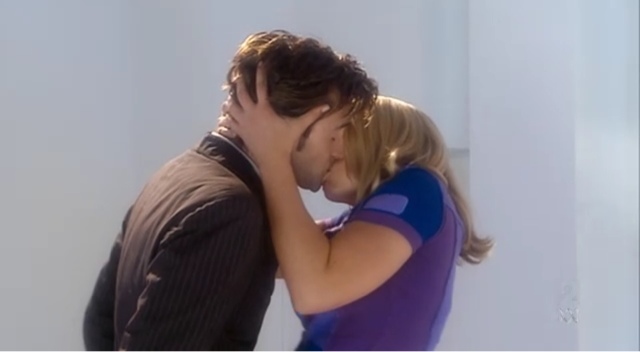
And they need to stop kissing The Doctor.

Seriously.